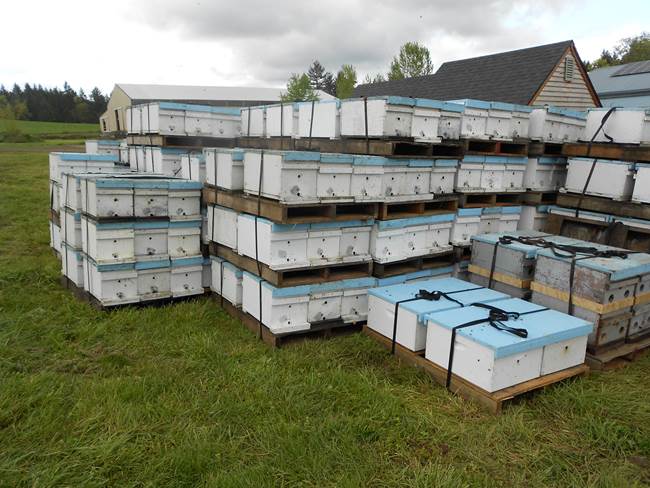
With annual death rates above 30%, beekeepers often must start new colonies each year. New colonies can be started in several ways. For new beekeepers, the usual starting method will be ieither by purchase of packages or nucs or capture of a bee swarm.
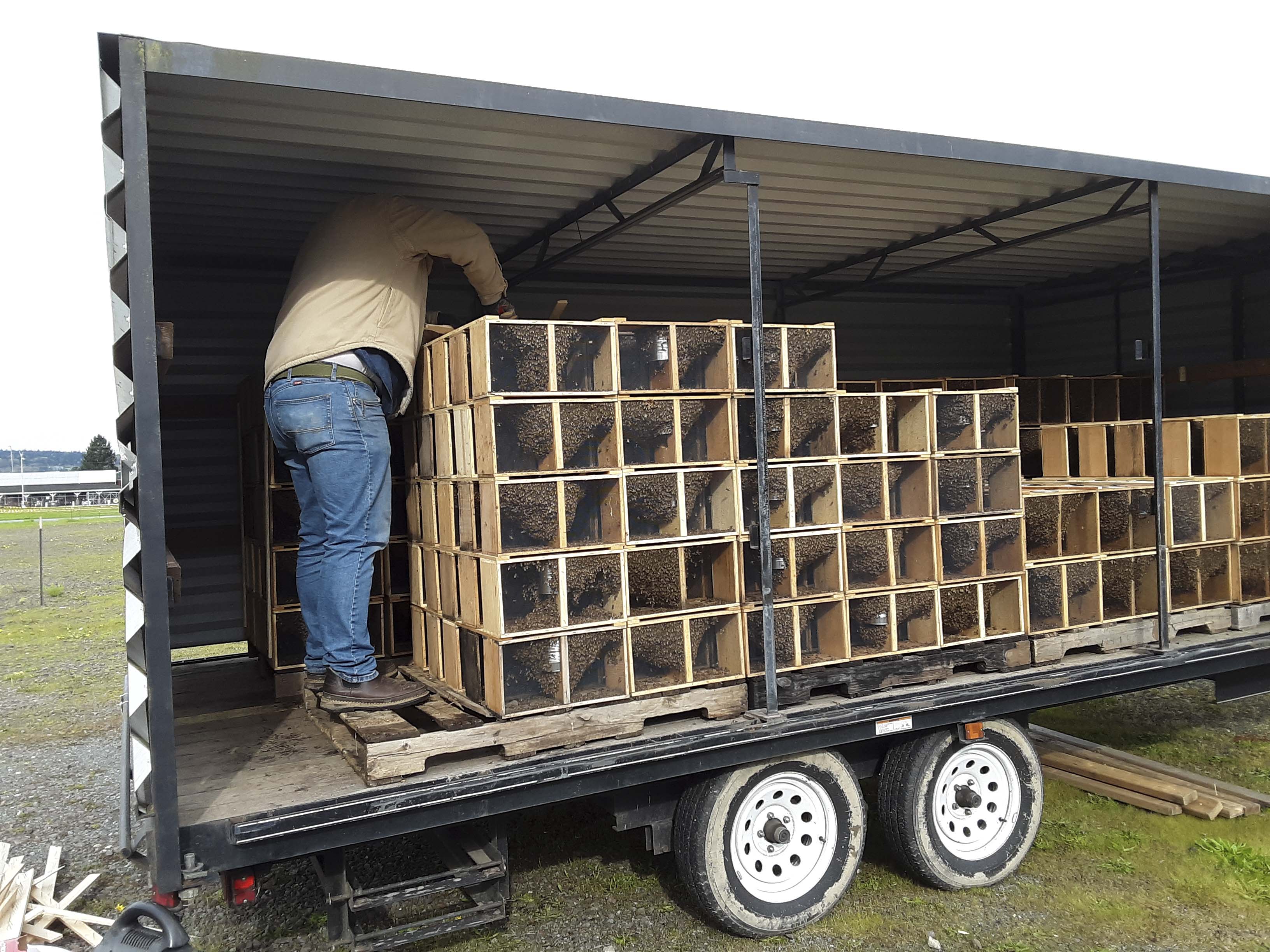
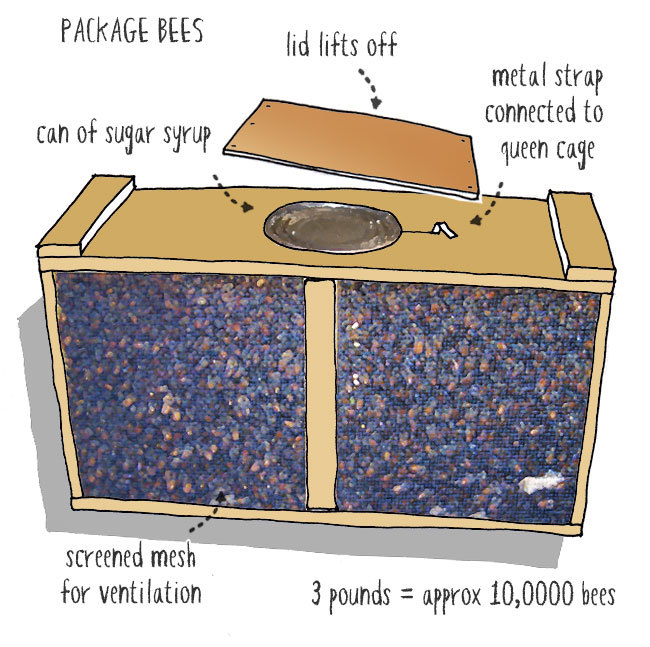
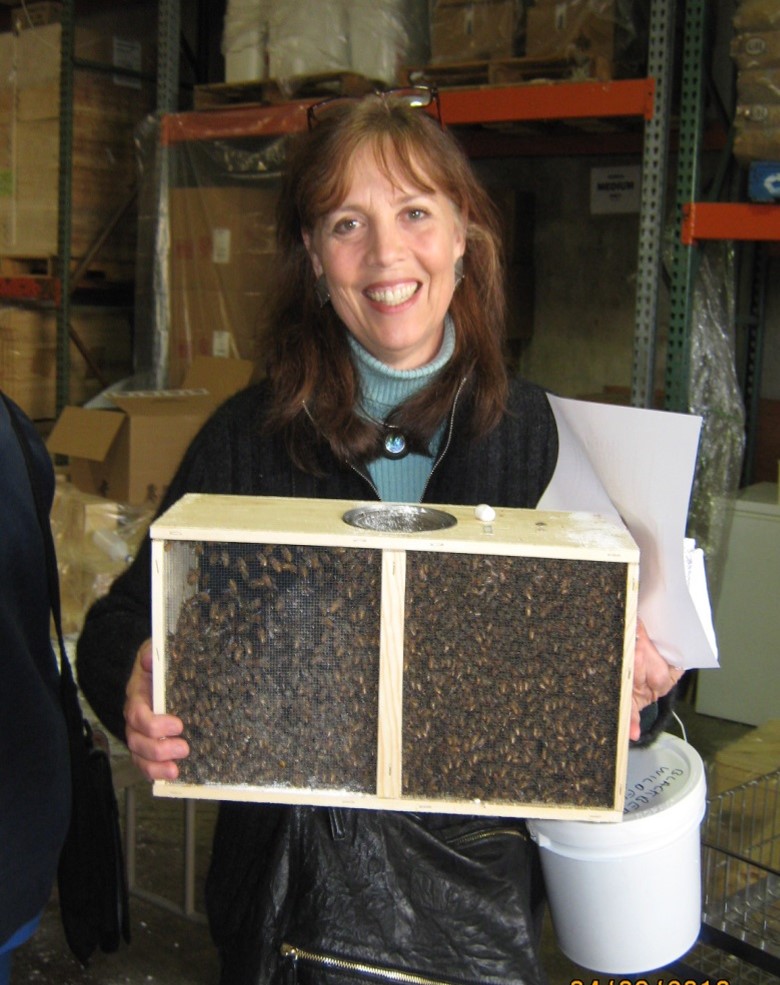
Packages of bees are two to five pounds of adult worker bees shaken from one or more spring colonies located in warmer climates. Packages are shipped with a caged queen (normally from different sourced colonies) and a feeder can.
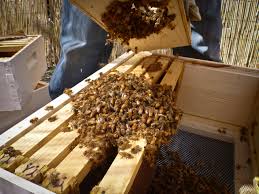
For best results package bees should be hived in the spring months. The queen is left in her cage to be released by the adult bees which are usually shaken from their shipping package directly into a new hive where the caged queen cage is positioned. They are then given a sugar water feeder. The adult population decreases initially until the queen is released from her cage and begins to lay eggs. Initially, queens will lay mostly fertilized eggs, but before long they will seek larger comb cells to lay some unfertilized eggs and produce drone offspring. Replacement worker adults emerge three weeks after hiving and queen egg laying begins. The worker population then begins to grow quickly. It is important to help the colony grow in population and secure enough honey stores to survive the first winter.
It is recommended to start package bees on new foundation frames. When drawn comb is taken from storage, even after many years of storage, there is the possibility that the bees will come down with American foulbrood (AFB), possibly due to the adult bees in the package having AFB spores in their gut and passing them on to their newly developing larvae. When started on foundation there is a break in brood production so the spores are released outside the colony on defecation flights prior to the beeswax comb being drawn out enough for brood production. Alternately, if equipment (mainly beeswax combs) from an AFB deadout is used, the newly established colony can develop AFB from spores of AFB in the used equipment. When in doubt don’t risk it. Start packages on foundation.
University of Georgia Cooperative Extension. 2017. Honey Bees and Beekeeping. University of Georgia Cooperative Extension Bulletin 1045: 1-8. https://secure.caes.uga.edu/extension/publications/files/pdf/B%201045_5.PDF
North Caroline State University /A&T State University Cooperative Extension. 2006. How to Install a Package of Honey Bees. North Caroline State University /A&T State University Cooperative Extension Beekeeping Note 2.17: 1-4. https://edgecombe.ces.ncsu.edu/wp-content/uploads/2013/01/Apiculture_Bee-pack-install.pdf?fwd=no
Nucs are another relatively common means of starting a colony of bees. A nucnucleus:
also called a "nuc;" a smaller colony of bees usually with three to five frames. Nucs are splits (divides) made from larger colonies. Nucs are purchased as a method of starting a new colony or as a resource to use to bolster weaker colonies. See more information about nucs <a href="index.cfm?pageID=3093#standard">here</a> and <a href="index.cfm?pageID=3417#nuc">here</a>.
(=nucleus, sometimes nook or nuk) colony is a smaller version of a full-sized colony. A nucnucleus:
also called a "nuc;" a smaller colony of bees usually with three to five frames. Nucs are splits (divides) made from larger colonies. Nucs are purchased as a method of starting a new colony or as a resource to use to bolster weaker colonies. See more information about nucs <a href="index.cfm?pageID=3093#standard">here</a> and <a href="index.cfm?pageID=3417#nuc">here</a>.
may be established with 1- 4 frames of brood and 1 or 2 support frames of bee bread and honey. Often a nucnucleus:
also called a "nuc;" a smaller colony of bees usually with three to five frames. Nucs are splits (divides) made from larger colonies. Nucs are purchased as a method of starting a new colony or as a resource to use to bolster weaker colonies. See more information about nucs <a href="index.cfm?pageID=3093#standard">here</a> and <a href="index.cfm?pageID=3417#nuc">here</a>.
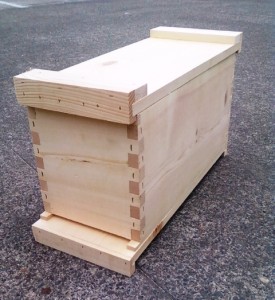
is housed in a smaller hive body (a nucleusnucleus:
also called a "nuc;" a smaller colony of bees usually with three to five frames. Nucs are splits (divides) made from larger colonies. Nucs are purchased as a method of starting a new colony or as a resource to use to bolster weaker colonies. See more information about nucs <a href="index.cfm?pageID=3093#standard">here</a> and <a href="index.cfm?pageID=3417#nuc">here</a>.
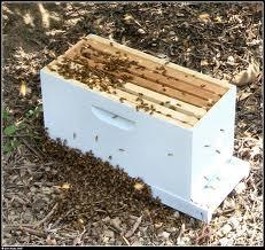
hive). When purchased as a starting method, the 3-5 frames of the nucnucleus:
also called a "nuc;" a smaller colony of bees usually with three to five frames. Nucs are splits (divides) made from larger colonies. Nucs are purchased as a method of starting a new colony or as a resource to use to bolster weaker colonies. See more information about nucs <a href="index.cfm?pageID=3093#standard">here</a> and <a href="index.cfm?pageID=3417#nuc">here</a>.
are transferred to a standard hive box at the intended apiaryapiary:
a place where beehives and beekeeping equipment are located; also called a bee yard. An out-apiary is a site away from the owner’s residence.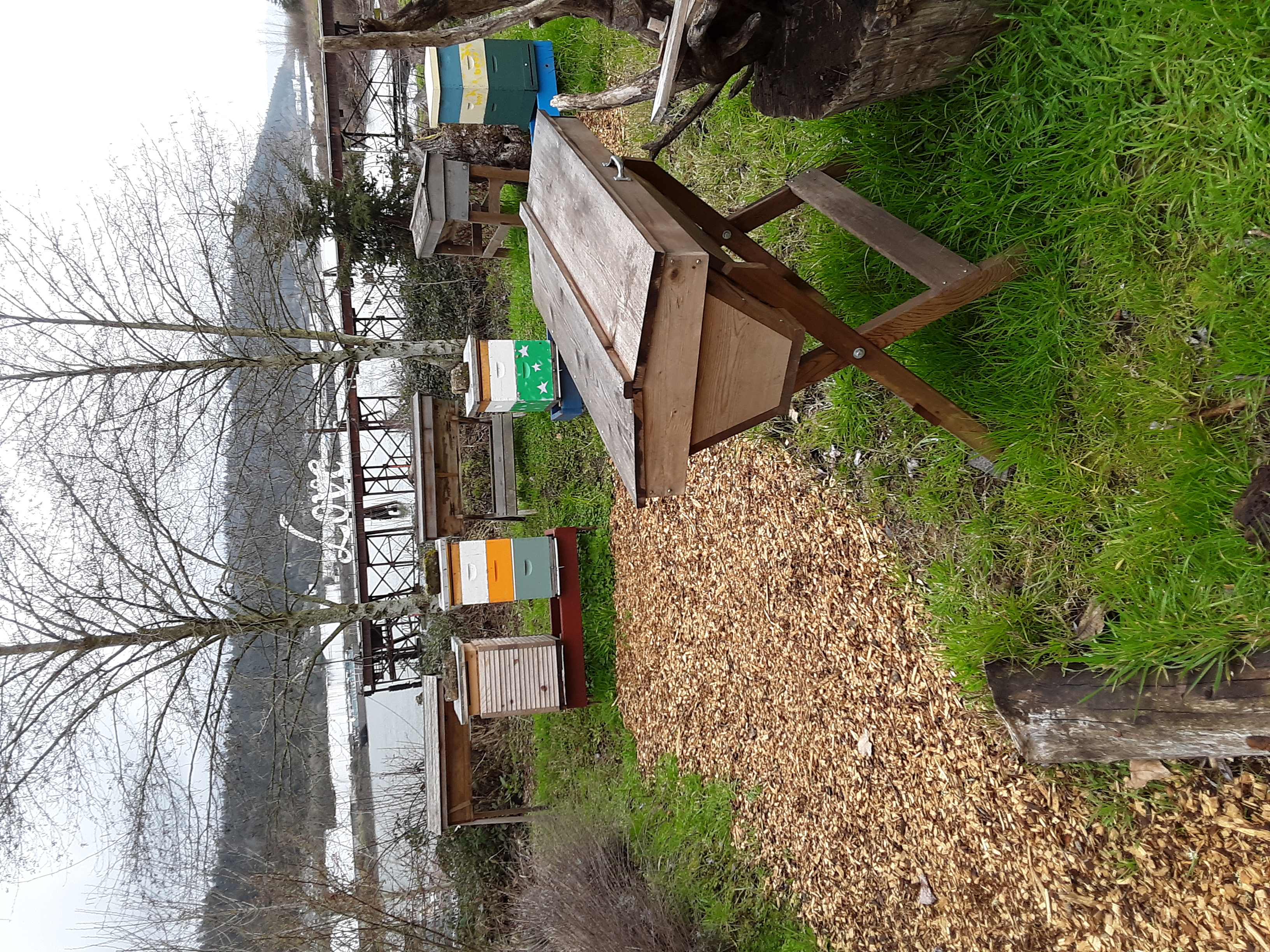 site.
A nucnucleus:
also called a "nuc;" a smaller colony of bees usually with three to five frames. Nucs are splits (divides) made from larger colonies. Nucs are purchased as a method of starting a new colony or as a resource to use to bolster weaker colonies. See more information about nucs <a href="index.cfm?pageID=3093#standard">here</a> and <a href="index.cfm?pageID=3417#nuc">here</a>.
grows faster than package bees. Often a second box is added after 3 weeks of initial transfer to a standard hive, depending on the season. Nucs, like package bees, should initially be fed sugar syrup. In some seasons, when started early, nucs can even provide some surplus honey to harvest.
Dadant and Sons Nucs, Swarms and Colonies, Pt. 1. Accessed 2024. https://www.dadant.com/learn/nucs-new-hive/
"Making Nucleusnucleus:
also called a "nuc;" a smaller colony of bees usually with three to five frames. Nucs are splits (divides) made from larger colonies. Nucs are purchased as a method of starting a new colony or as a resource to use to bolster weaker colonies. See more information about nucs <a href="index.cfm?pageID=3093#standard">here</a> and <a href="index.cfm?pageID=3417#nuc">here</a>.
Colonies" Youtube, uploaded by Paul Kelly, University of Guelph Honey Bee Research Centre, October 13, 2022. https://www.youtube.com/watch?v=hcetzBlK6r8
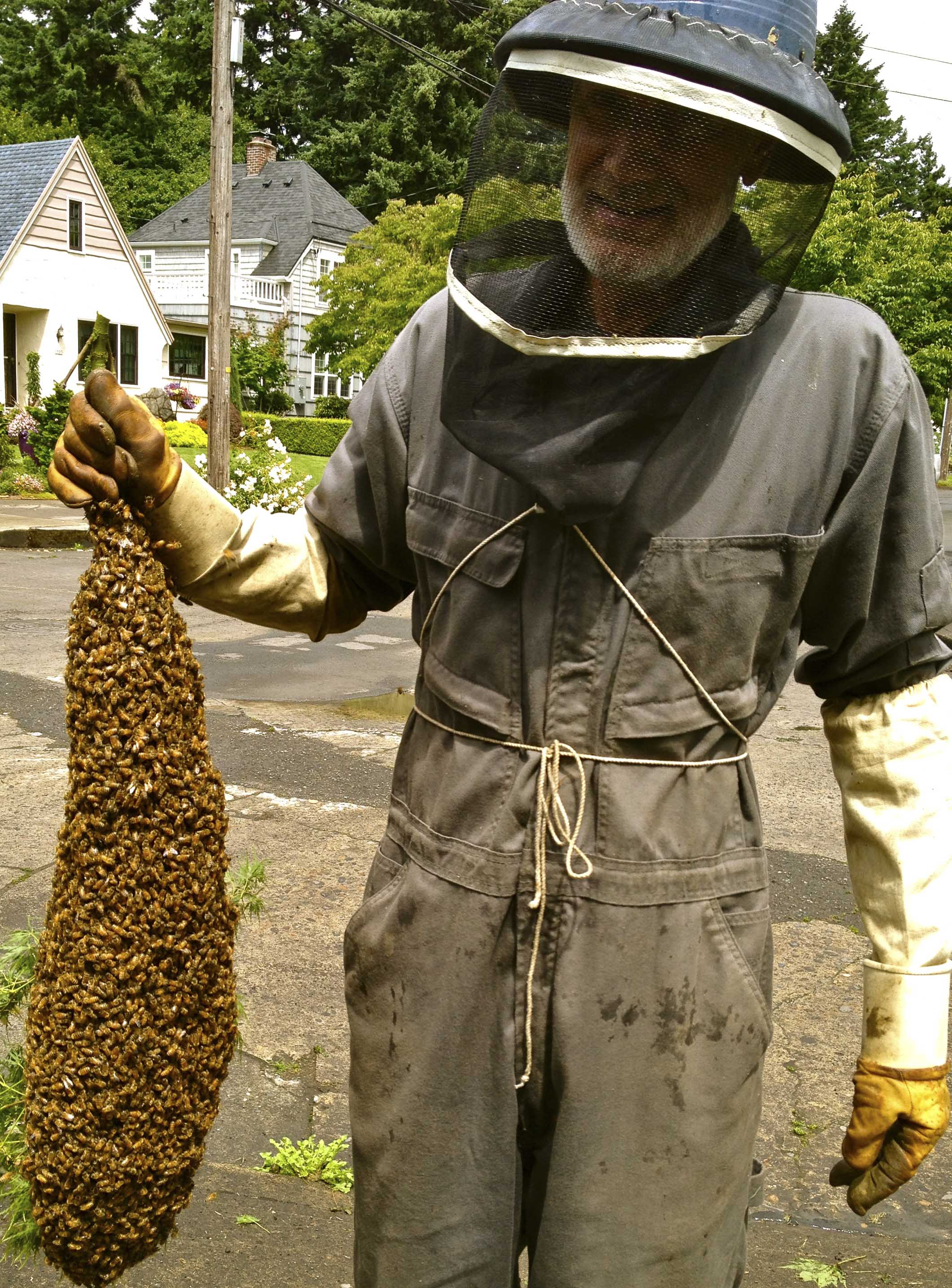
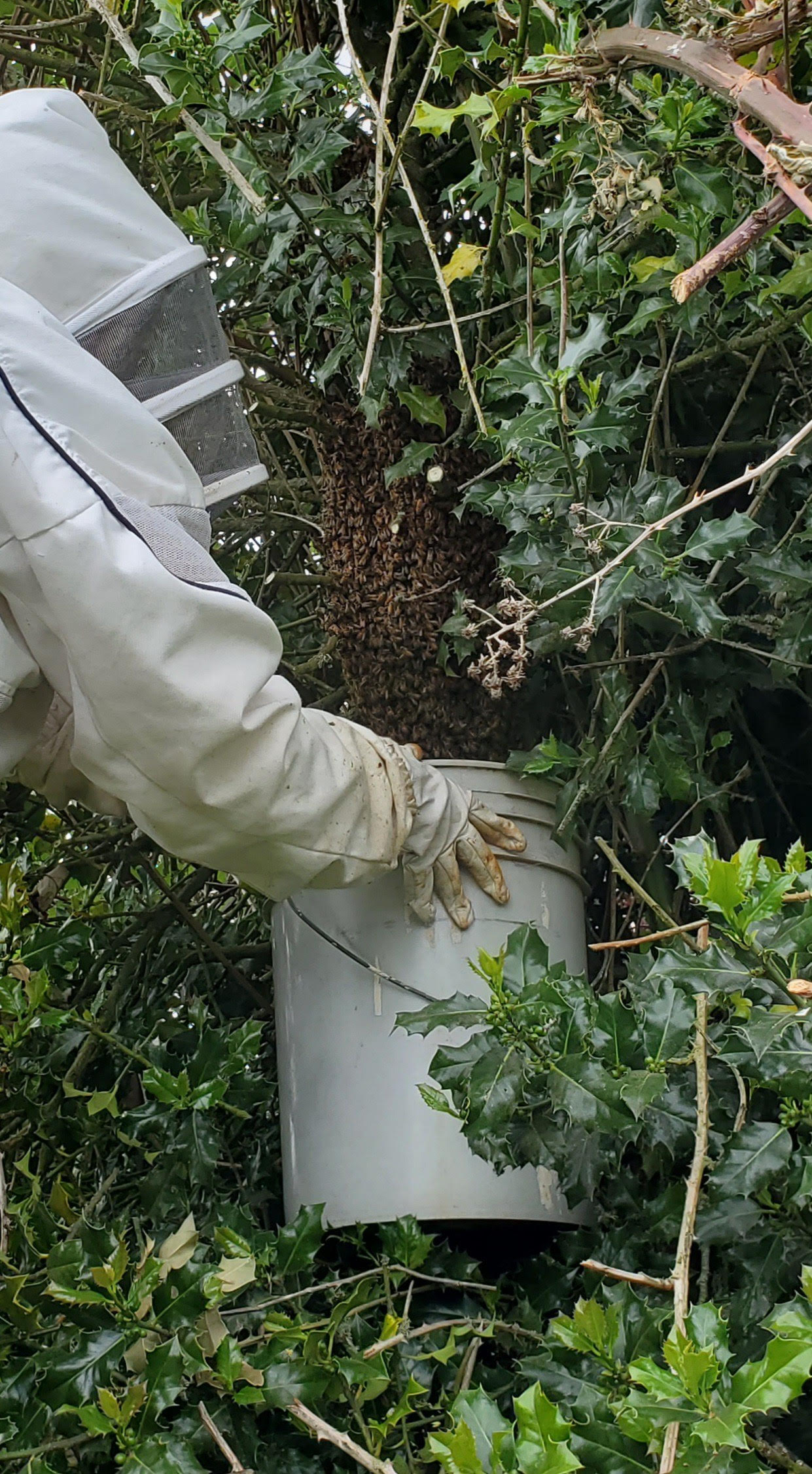
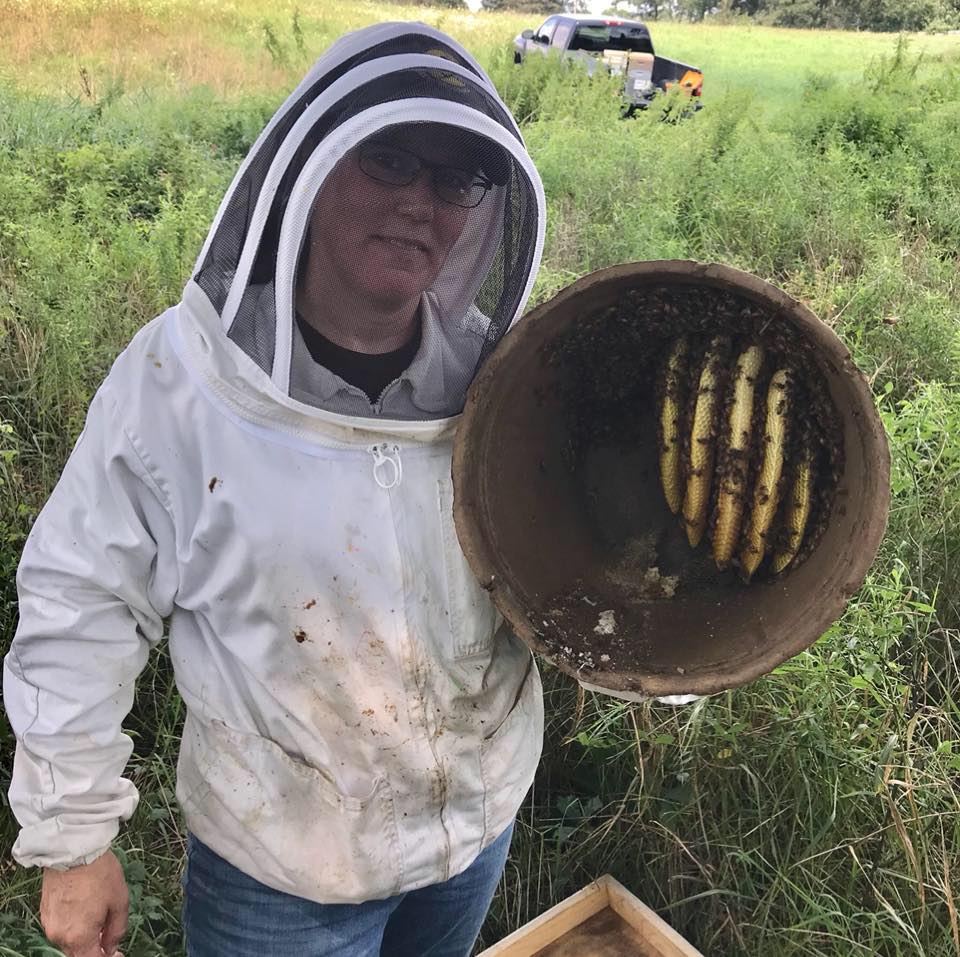
Capturing a swarm of bees is another means of starting a new hive. Bees may be transferred from the swarm bivouacbivouac:
a temporary cluster of swarming honey bees intermediate between leaving home and finding a new nest cavity
site (vegetation or a structure) directly into a hive, or the swarm may be captured by shaking the bees into a bucket or convenient vessel and then subsequently transferring the bees into a hive. The swarm doesn’t always stay when hived.
Swarms quickly develop in the spring build-up when queens begin to fill the available brood comb with eggs. Congestion in the brood area results in inefficient distribution of the essential queen pheromones that hold the colony together. Abundant incoming resources and favorable environmental conditions can then lead to rearing of swarm queen cells and preparations to reproduce the colony unit via a swarm. The old mated queen will depart with one half to two thirds of the adult population, leaving behind developing replacement swarm queen cells, all the resources (except for honey carried by the departing workers in their honey stomach), and the beeswax combs. The departing bees form a swarm cluster at a bivouacbivouac:
a temporary cluster of swarming honey bees intermediate between leaving home and finding a new nest cavity
site, usually within a short distance of the existing homesite. Scout beesscout bees:
worker bees that search for pollen, nectar, water, propolis and, during swarming, suitable nesting sites
search for and inform the bivouacbivouac:
a temporary cluster of swarming honey bees intermediate between leaving home and finding a new nest cavity
swarm cluster of potential new homesites; when consensus is reached the swarm again takes to the air to move into a new homesite.
Swarm bees are excellent in drawing foundation into comb and building parallel combs. Swarm captures may store surplus honey in some locations. However, in the majority of swarm-started hives, as the colony builds strength, the bees usually seek to replace their queen. Most replacement is via supersedure, but early swarm captures may swarm again (especially likely in Africanized bees). Some of these colonies may have a mother-daughter queen condition until later in the season when the old queen is killed by the workers.
Many individuals begin as beekeepers when they happen to hear of a swarm and then capture it. Swarm capture is a good way to replace winter deadouts. Repopulate the equipment from a previous season deadout. A deadout necropsy should confirm that death of the previous colony was not likely due to AFB disease.
“Catching a Swarm Part 1” YouTube, uploaded by University of Guelph Honey Bee Research Centre, 18 October 2021. https://www.youtube.com/watch?v=_qJy3lJgTA0
“Catching a Swarm Part 2” YouTube, uploaded by University of Guelph Honey Bee Research Centre, 25 October 2021. https://www.youtube.com/watch?v=sdLLv4E9gGY
Colonies are routinely split (divided) during spring buildup to reduce the possibility of swarming and to create new colonies to replace colonies lost during overwintering period. Splits can be taken from strong, built-up spring survivors. Splits may consist of one to three frames of brood with one or two support frames (honey and bee bread). The number of frames of brood and support frames taken from a donor colony will depend on the size of the donor colony, time of season, and availability of resources for foragers. Additional nurse bees are usually shaken from one to several brood frames when the split is created. The split should be given sugar syrup to help it establish.
The frames of a split can be put into a nucnucleus:
also called a "nuc;" a smaller colony of bees usually with three to five frames. Nucs are splits (divides) made from larger colonies. Nucs are purchased as a method of starting a new colony or as a resource to use to bolster weaker colonies. See more information about nucs <a href="index.cfm?pageID=3093#standard">here</a> and <a href="index.cfm?pageID=3417#nuc">here</a>.
box (usually the split then is termed a nucnucleus:
also called a "nuc;" a smaller colony of bees usually with three to five frames. Nucs are splits (divides) made from larger colonies. Nucs are purchased as a method of starting a new colony or as a resource to use to bolster weaker colonies. See more information about nucs <a href="index.cfm?pageID=3093#standard">here</a> and <a href="index.cfm?pageID=3417#nuc">here</a>.
) or hive body. Splits can be kept in same apiaryapiary:
a place where beehives and beekeeping equipment are located; also called a bee yard. An out-apiary is a site away from the owner’s residence. (with some risk of adult bees drifting back to original home colony) or moved to a different apiaryapiary:
a place where beehives and beekeeping equipment are located; also called a bee yard. An out-apiary is a site away from the owner’s residence.. The queenless portion (usually the split) is requeenedrequeen:
to replace a queen; old queens are often removed and replaced by a ripe queen cell or by a mated queen via an introduction cage
with a cappedcapping:
the covering that bees add over comb cells containing fully ripened honey or to cap brood that has reached the pupal stage; bee bread cells are not capped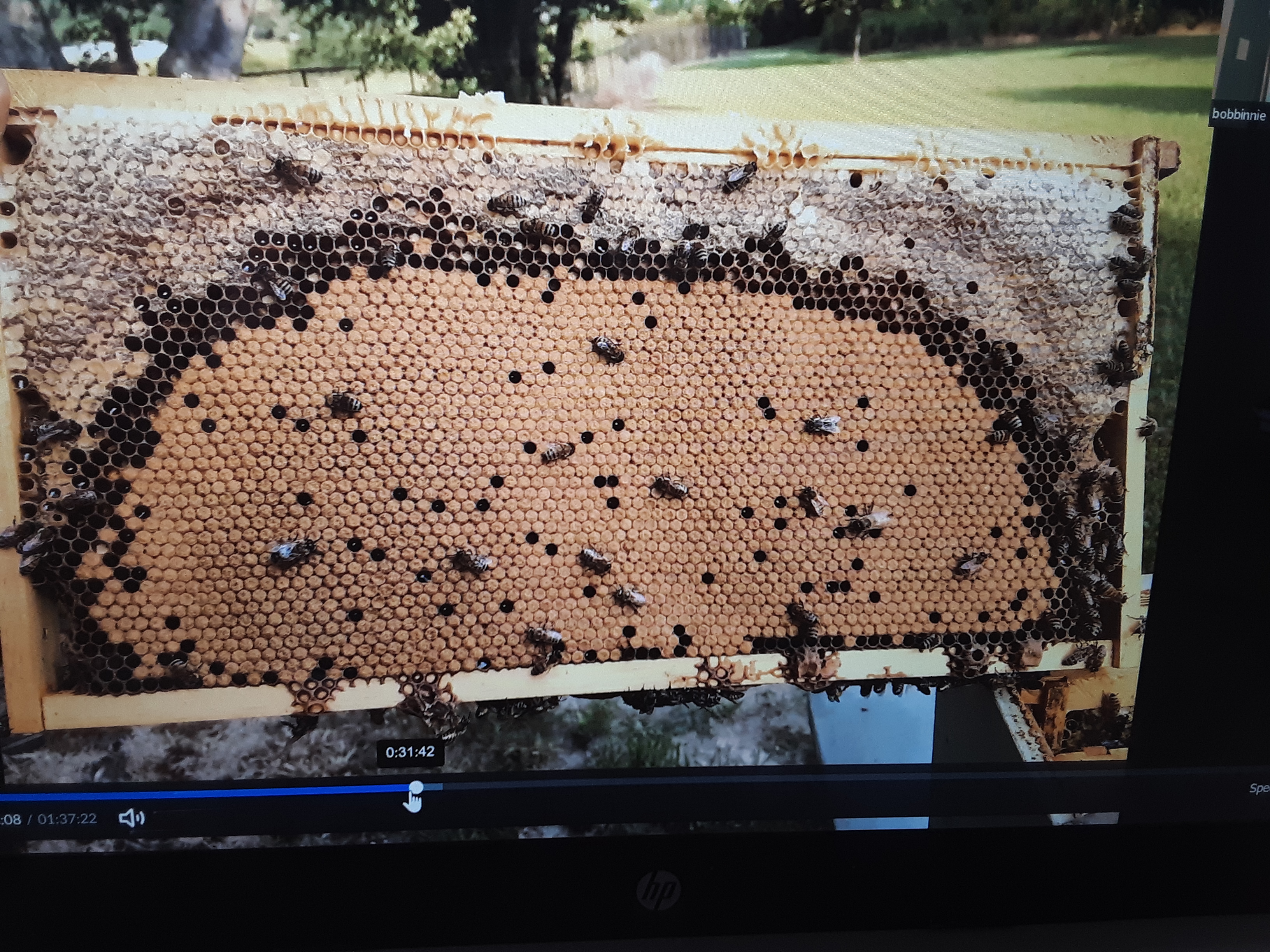 queen cell or a mated queen in a cage or allowed to rear a replacement queen via emergency queen cells.
Early spring splits should include 2 or 3 brood frames with additional younger-aged adult bees shaken into the split at establishment. But a split is not a one-and-done. The split should be checked the day following establishment and again within a week to be sure enough adult bees are still present to cover brood and the queen is well. The frames of the split might be moved to a larger (standard) box to allow a queen to realize full egg-laying potential.
An alternative use of a split, in addition to creating a new colony, is to uniteunite:
combine one colony with another; opposite of divide
(combine) with another colony once they are fully functional and queenrightqueenright:
a colony with&#xocate bee colonies on private or business property. They hire bee wranglers to care for the bees. Owners usually foot the bill to purchase and cover the expenses to care for the colonies. Corporations are interested in such arrangements as a means of environmental consciousness. The beekeeper may offer education for owners and even harvest and sell honey that might be produced by the bees.
With growth, beekeepers may need additional apiaryapiary:
a place where beehives and beekeeping equipment are located; also called a bee yard. An out-apiary is a site away from the owner’s residence. sites (termed out-apiaries). Sometimes sites, as well bees and equipment, might be purchased from a retiring beekeeper. Otherwise, additional sites 2 or more miles from another site might be secured by visiting landowners within a reasonable distance of existing sites. On occasion, bee clubs will get a request from a homeowner who would like to host a hive. Keeping bee colonies on corporate properties has become a business for some beekeepers.
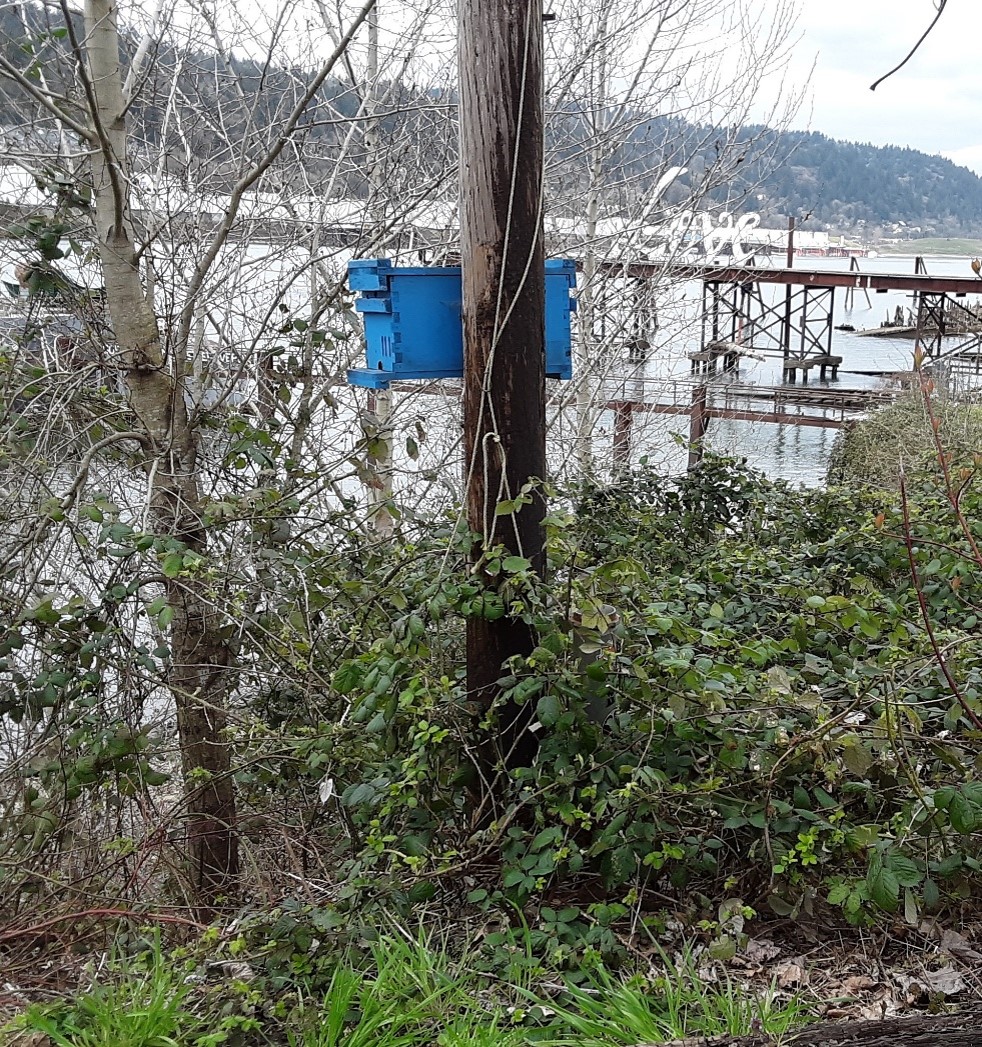
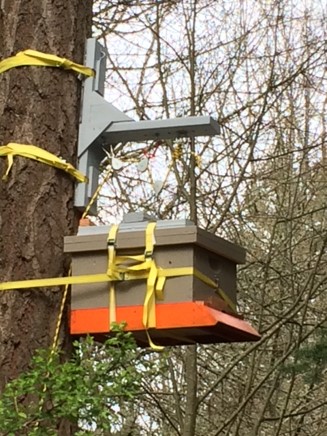
A bait hive is a method of attracting bees to enable you to use them to start a new colony. A bait hive is an empty structure designed to be attractive to scout beesscout bees:
worker bees that search for pollen, nectar, water, propolis and, during swarming, suitable nesting sites
leaving a hive preparing to swarm or that leave the swarm bivouacbivouac:
a temporary cluster of swarming honey bees intermediate between leaving home and finding a new nest cavity
searching for a new homesite. Beekeepers usually entice bees to bait hives with a combination of old beeswax comb, flower odor such as lemongrass extract, or with the scent gland extract released by scenting bees (swarm lure).
Bait hives may be bee hives (nucnucleus:
also called a "nuc;" a smaller colony of bees usually with three to five frames. Nucs are splits (divides) made from larger colonies. Nucs are purchased as a method of starting a new colony or as a resource to use to bolster weaker colonies. See more information about nucs <a href="index.cfm?pageID=3093#standard">here</a> and <a href="index.cfm?pageID=3417#nuc">here</a>.
boxes or standard 8 or 10 frame boxes) or paper, wooden, or plastic boxes of various designs. An advantage of using a standard box or a nucnucleus:
also called a "nuc;" a smaller colony of bees usually with three to five frames. Nucs are splits (divides) made from larger colonies. Nucs are purchased as a method of starting a new colony or as a resource to use to bolster weaker colonies. See more information about nucs <a href="index.cfm?pageID=3093#standard">here</a> and <a href="index.cfm?pageID=3417#nuc">here</a>.
for a bait hive is the ease of transfer of a captured swarm to a standard hive. When using non-standard capture boxes, such as the flower pot shown in the illustration below, the bees need be transferred as soon as possible to standard bee equipment before they have time to build parallel beeswax combs. If comb is built then they can be cutout and pieces and held in frames at transfer.
Bait hives should be hung in elevated areas at least 10 feet high and visible to the bees. NOTE: Some do not hang but simply place a baited hive within apiaryapiary:
a place where beehives and beekeeping equipment are located; also called a bee yard. An out-apiary is a site away from the owner’s residence. - swarms are known to enter empty stored hive equipment.
Check bait hives every few days during swarm season to transfer captures to a more convenient location or to standard hive equipment. It is good practice to put any new hive in an area isolated from the rest of your bee hives to be able to check for disease, temperament, and productivity of the new hive before adding it to the established apiaryapiary:
a place where beehives and beekeeping equipment are located; also called a bee yard. An out-apiary is a site away from the owner’s residence.. Swarm captures are excellent comb builders but will likely replace their queen within the first few weeks.
Seeley TD, Morse RA, and Nowogrodzki R. 1989. Bait Hives for Honey Bees. Cornell Cooperative Extension Information Bulletin No. 187. https://ecommons.cornell.edu/server/api/core/bitstreams/6a183063-f398-4552-b4dd-f14a9488faed/content
Caron D. 2006. Bait hives. Mid-Atlantic Apicultural Research & Extension Consortium Publication 3.7. https://canr.udel.edu/maarec/wp-content/uploads/sites/18/2010/03/BAIT_HIV.pdf
Ostrofsky M. 2017. Get your bait hives ready. Bee Culture. Accessed 2023. https://www.beeculture.com/get-bait-hives-ready/