Brood nnest becomes restircted with nectar storage. Burr combburr comb:
comb built between frames, between boxes, or in spaces where the bee space is not maintained. Often used to rear drones, as a ladder to go to another hive box, or to fill in space that is greater than bee space.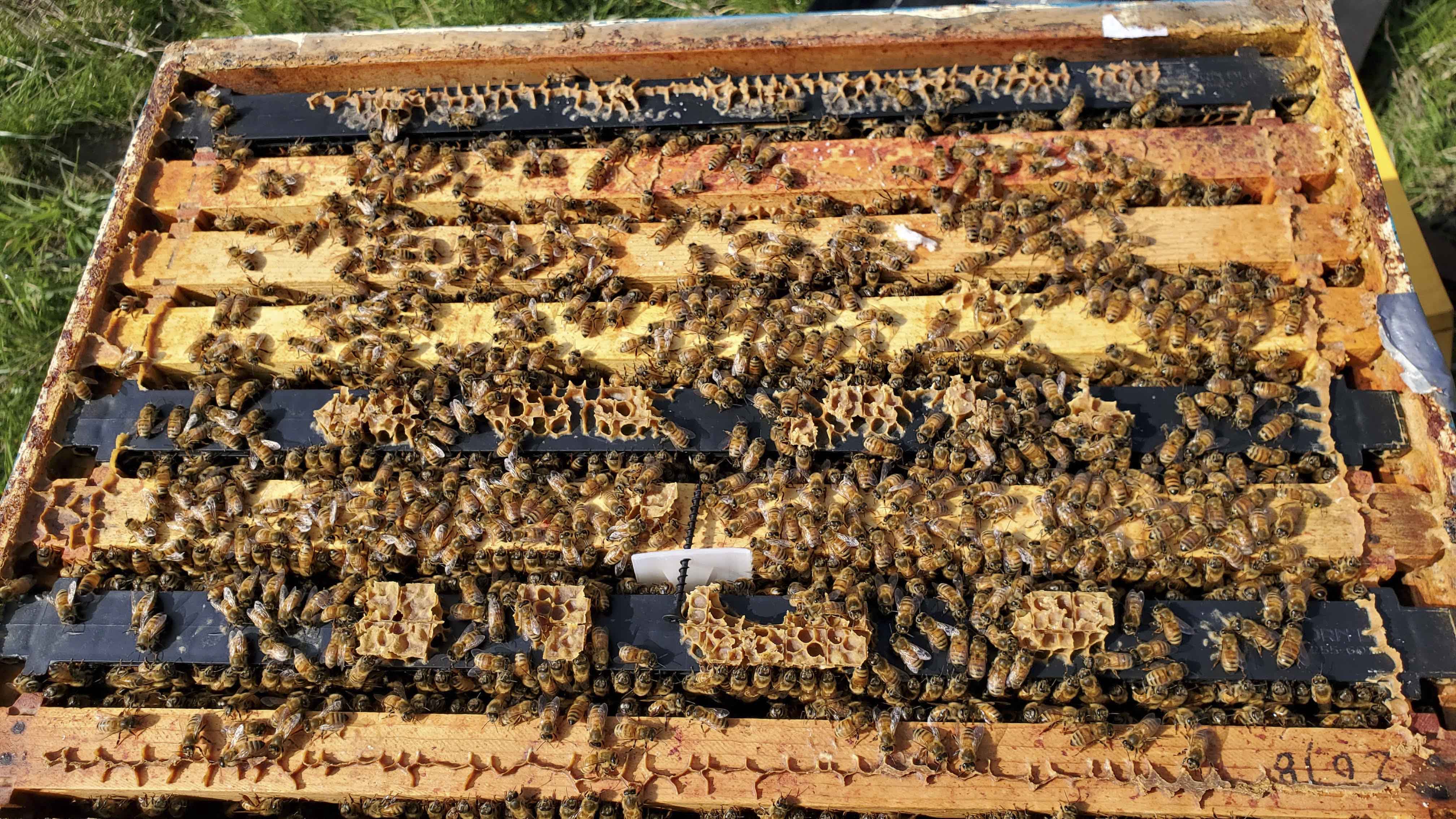 with nectar/honey; whiting of top of frames of top-most box.
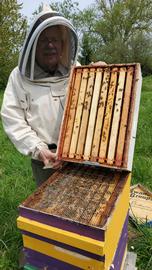
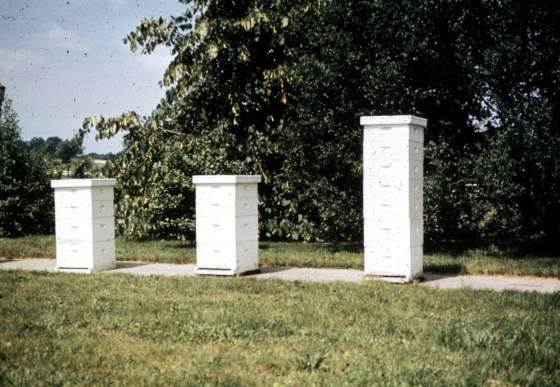
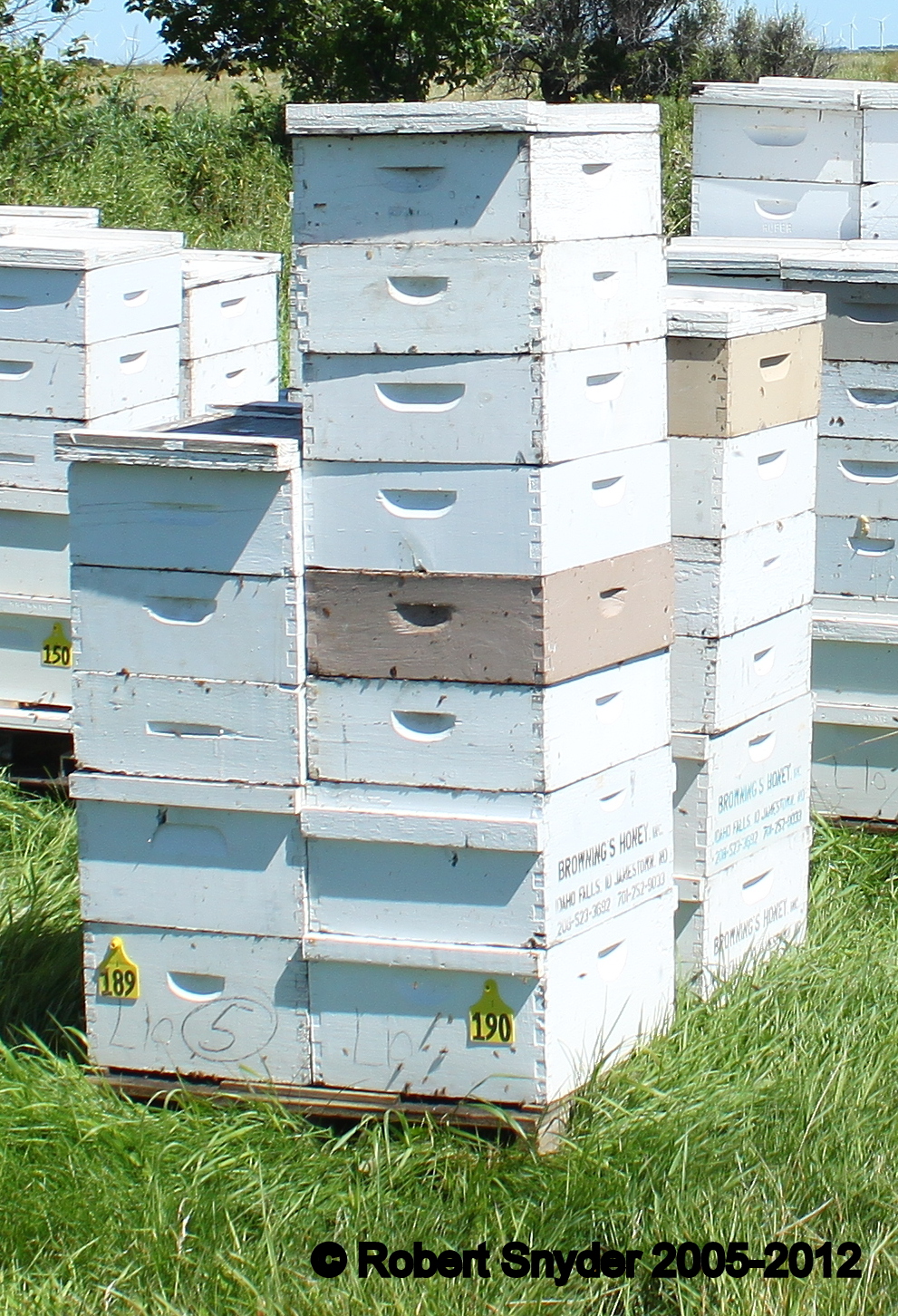
Timely supering of colonies assists in separation of brood area (below) from honey storage area (above and to sides of brood). If fully expanded, brood will fill most of the comb cells of two boxes. When the nectar flow begins, the bees may seek to compact the brood area by filling cells in the brood nest (backfilling) with liquid nectar, perhaps leading to a “honey bound” condition, severely restricting further brood nest expansion. Such crowding may lead to queen rearing and swarming or underpopulated colonies later in season.
Beekeepers need to anticipate colony supering needs (‘oversuper’), thus ensuring sufficient nectar storage space, especially if they plan to harvest honey. Failure to provide adequate super space may limit the potential honey harvest or result in missed opportunity for colony to provide harvestable surplus honey. Individuals might practice undersupering as the nectar flow begins to slow to ensure honey-filled cells are properly ripened and to consolidate equipment use. In some instances the bees may only use the midde of a super, filling only the center frames with honey.
Supering of colonies for production of honey in the comb is more difficult than supering for extracted honey. Likewise supering with foundation is more difficult than using drawn comb supers. Comb honey and foundation in supers requires monitroing of the nectar sources and adding supers as the nectar flow begins to insure bees draw the comb in frames, ripen and cap it quickly so it may be removed promptly. Supering for extracted honey does not require such precise timing of adding or removal of supers.
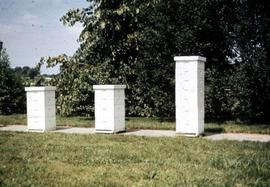
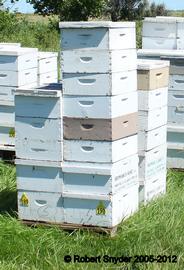
There is some confusion with terms. Supers are boxes added above the brood area to capture (and potentially harvest) surplus honey. Supers may be of any size but some label a super any smaller depth box (non-standard sized). Properly it is a box for storage of honey. Supering is the action of adding boxes to colonies. Supered colonies are hives that have some supers added to the basic brood area with the intent to capture surplus honey for harvest.
Honey in supers might also be removed and used to feed bees at another seasonal period rather than used to harvest for use/sale. Honey-filled frames need to be stored to keep out miscellaneous pests - a freezer is an ideal storage for frames of honey intented to be used (to feed/harvest) at a later date. An altenative is to leave supers with honey in place on colonies until ready to use/harvest to avoid damage - the bees will take better care fo honey-filled cells than we can as beekeepers.
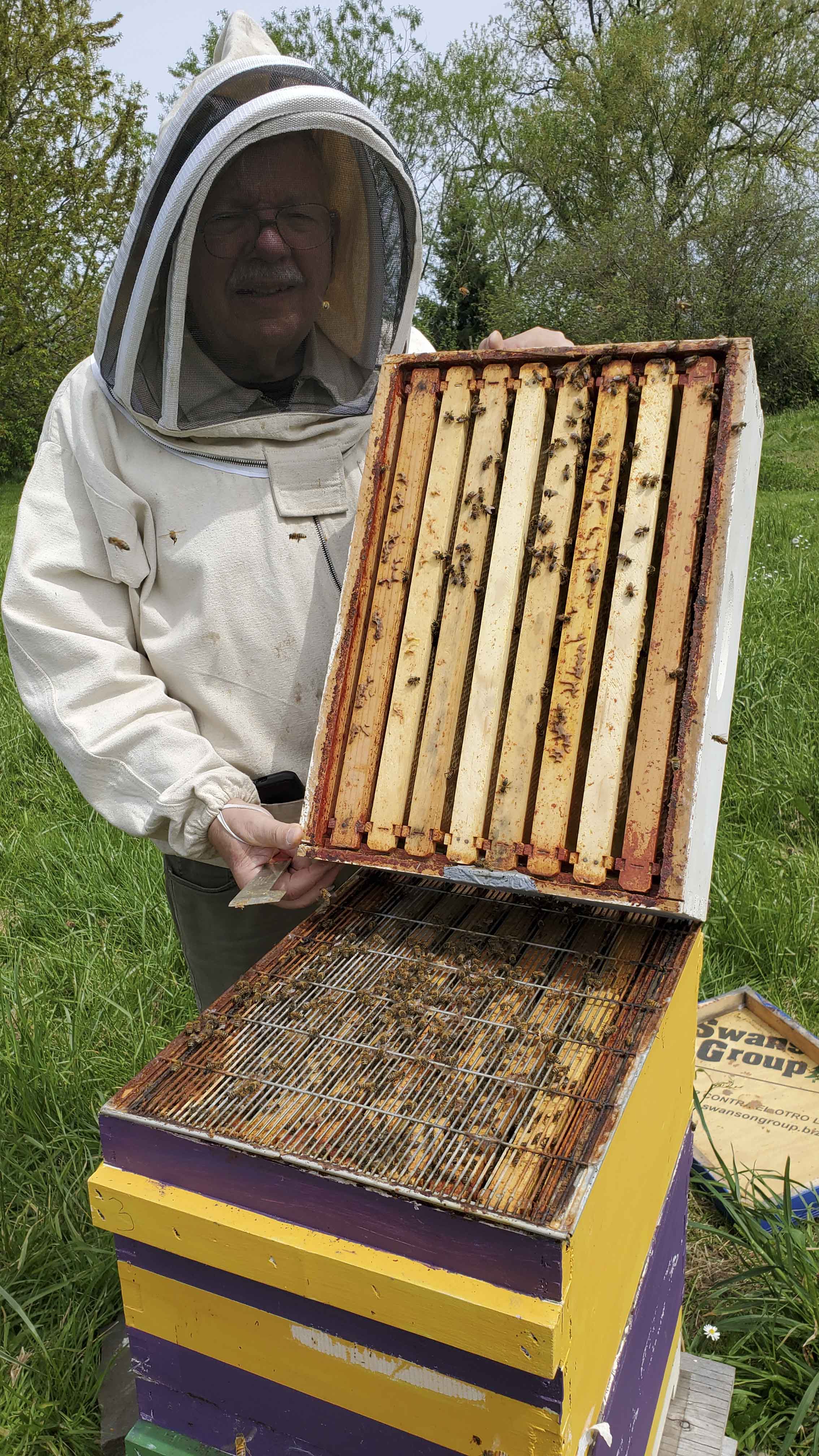
honey bound brood nest
Nabors, R. 2017. Supering your colonies for the nectar flow. Amer Bee Journal. 157(February)
Univ Guelph (Paul Kelly). https://www.youtube.com/watch?v=F38kxYcYMTM