Small stubby queens, queens with bodily injury, queens not able to mate successfully and become drone layers or quickly superseded by the workers.
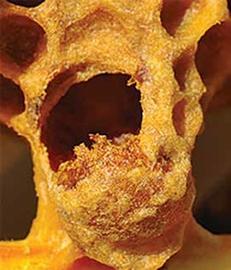
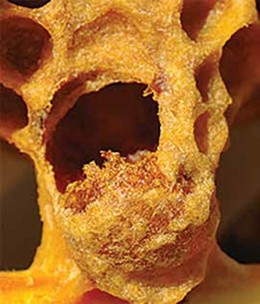
Queen cells destroyed by holes chewed in their side
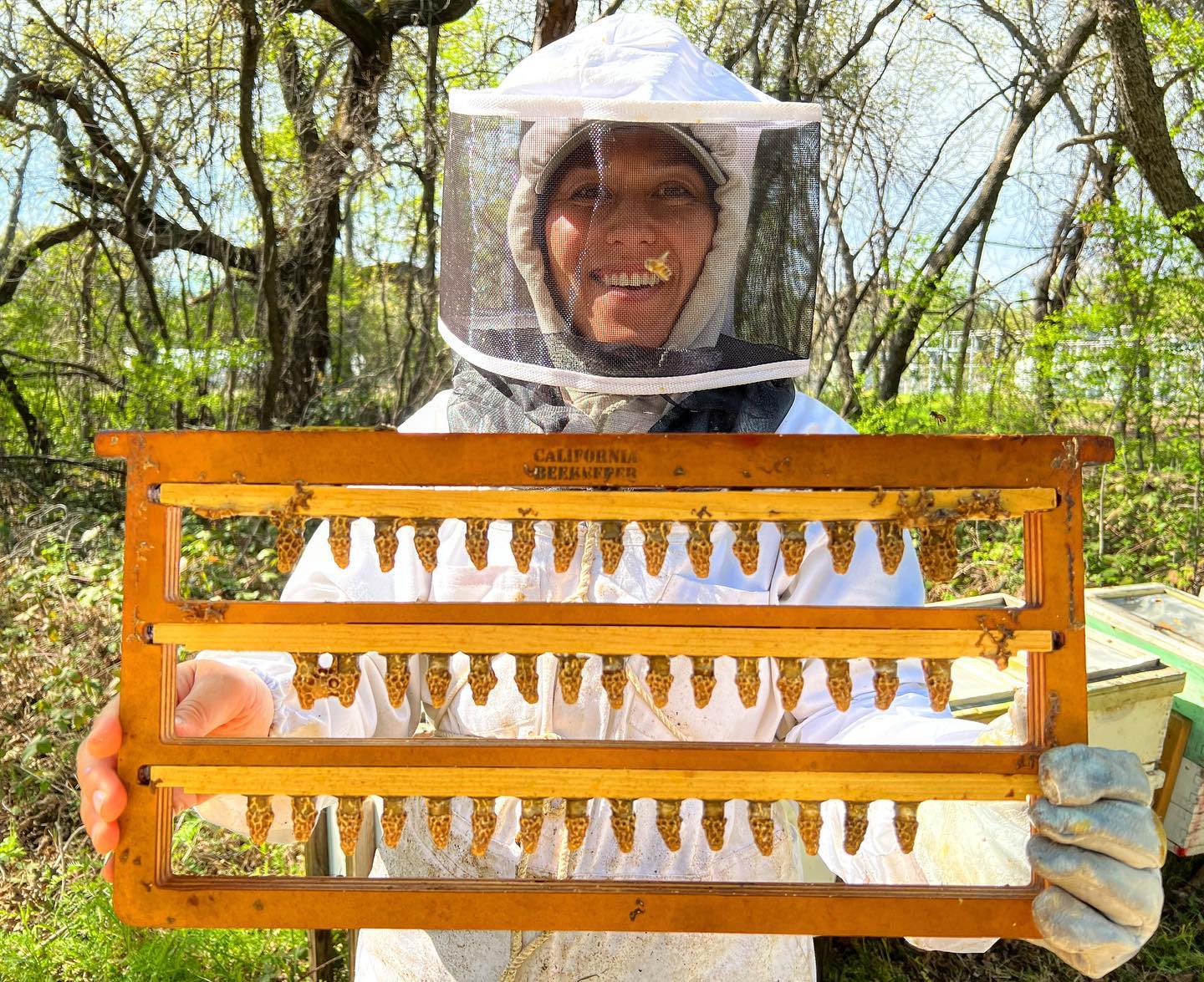
Queen failure is consistently identified as one of the top contributors to colony loss. Beekeepers can replace failing queens and divide healthy colonies in the early spring to offset winter colony losses if they can readily source queens from producers. Due to heavy demand the need for mated queens in the spring often exceeds domestic supply. Using honey bee queen cells is an economical alternative to buying mated queens.
Queen cells are sensitive to temperature and movement. Success and survival when using queen cells to requeenrequeen:
to replace a queen; old queens are often removed and replaced by a ripe queen cell or by a mated queen via an introduction cage
depends on proper timing, preparation, and handling. Shipping (transport) of queen cells, eve short distances/time requires special handling and their being kept warm. Temperture fluctuation, movement injury (especially on 5th or 11th development days following grafting) can result in death of a developing queen or damage to developing wings/legs/body parts. Emerging queens might not be able to mate successfully.
Queen cells cut from frames (sucha as "extra" swarm or emergency cells) must be removed from original colony very carefully, without any damage to the cell itself when trying to transfer them to another colony. Queen cells should be pressed into area of brood of receiving colony carefully so they don't fall but also so they are not damaged. It is far safer to transfer the entire frame/comb containing the developing queen cell rather than trying to remove and transfer individual cells.
Note :commercial queen prodcers pull their queen cells from the cell building colonies on the ninth or tenth day (from grafting day which is normally as 1st day larva(, and store the queen cells inside an incubator for the remaining two or three days. They use cell protector cages to avoid possibility of early virgin queen emergence in incubator (or cell builder colony) - if this happpens all the cells can be destroyed by the queen chewing a hole in the side of the cell. See also chewed hole in queen cell
small queens, supersdure, poorly mated queens, chewed hole in queen cell
Topithofer, Ellen, Megan Mahoney and Ramesh Sagili. 2021. Guide to shipping honey bee queen cells. Project Apis m. projectapism.org/uploads/1/0/5/7/105706229/queen_shipping_guide_final_pdf_for_download.pdf
https://extension.psu.edu/queen-cell-production-grafting-and-graft-free-methods
https://www.theapiarist.org/queen-cells-dont-panic/
Kelly, Paul 2019. Handling Queen Cells Univ Guelph https://www.youtube.com/watch?v=xW_Ca96-j0o
Https://www.bing.com/videos/search?q=queen+cell+handling&docid=608056267169293237&mid=F5909CB8D10B9AAAAB35F5909CB8D10B9AAAAB35&view=detail&FORM=VIRE&msclkid=6d9085b2aacd11ec9505d0f148fb2e4b