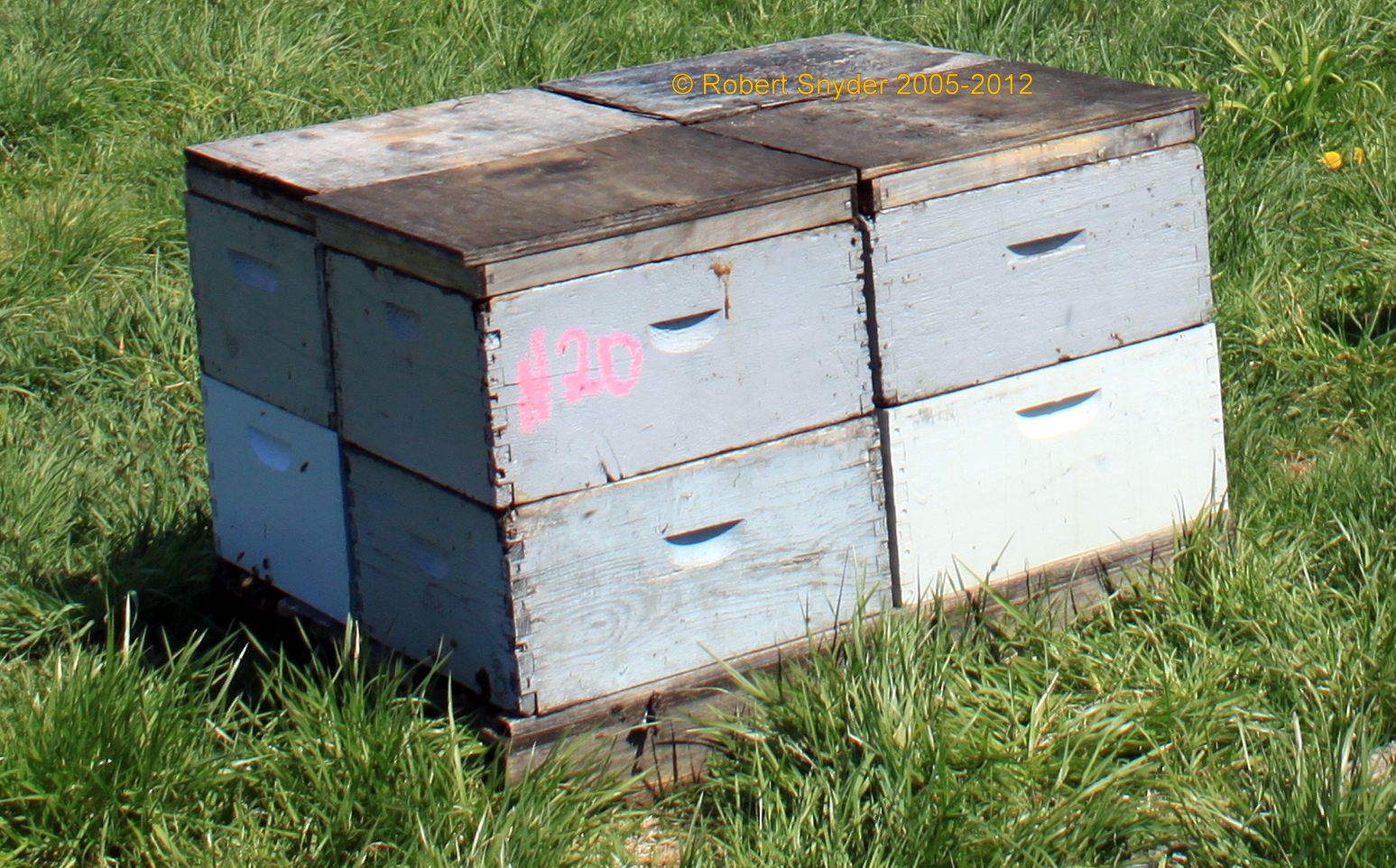
The beekeeper may move bee colonies for any number of reasons. Pollination of agricutural crops involves movement of thousands of colonies annually. Larger-scale beekepers derive the majority of their income form rental of colonies for a pollination fee.
Colonies may be moved a short distance - 3 feet within an apiaryapiary:
a place where beehives and beekeeping equipment are located; also called a bee yard. An out-apiary is a site away from the owner’s residence. so bees may re-orient to their home or moved 3 miles distance for a month or so and then moved back to the original site to repositon colonies.
When beekepers split (divide) colonies, the older bees that are moved to a new hive site may return to their original home site location (drifting) if the colony split is sited in the same apiaryapiary:
a place where beehives and beekeeping equipment are located; also called a bee yard. An out-apiary is a site away from the owner’s residence. location. Nurse-age bees have not yet learned their hive location and remain to care for the brood. Any split should be checked the next day to confirm enough bees remain in the split to care for the brood.
Bond, Jennifer K., Claudia Hitaj, David Smith, Kevin Hunt, Agnes Perez, and Gustavo Ferreira. 2021. Honey Bees on the Move: From Pollination to Honey Production and Back. ERR-290, U.S.D. A., Economic Research Service.
https://www.honeyflow.com/blogs/beekeeping-basics/how-to-move-a-bee-hive