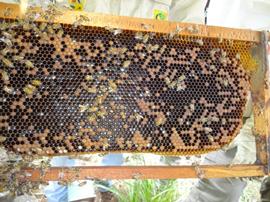
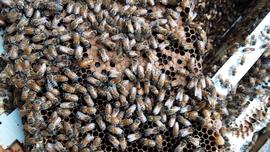
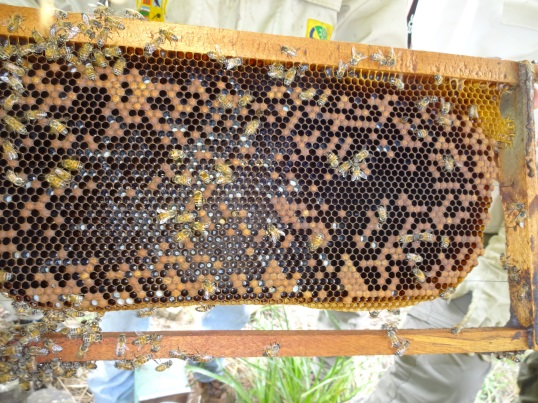
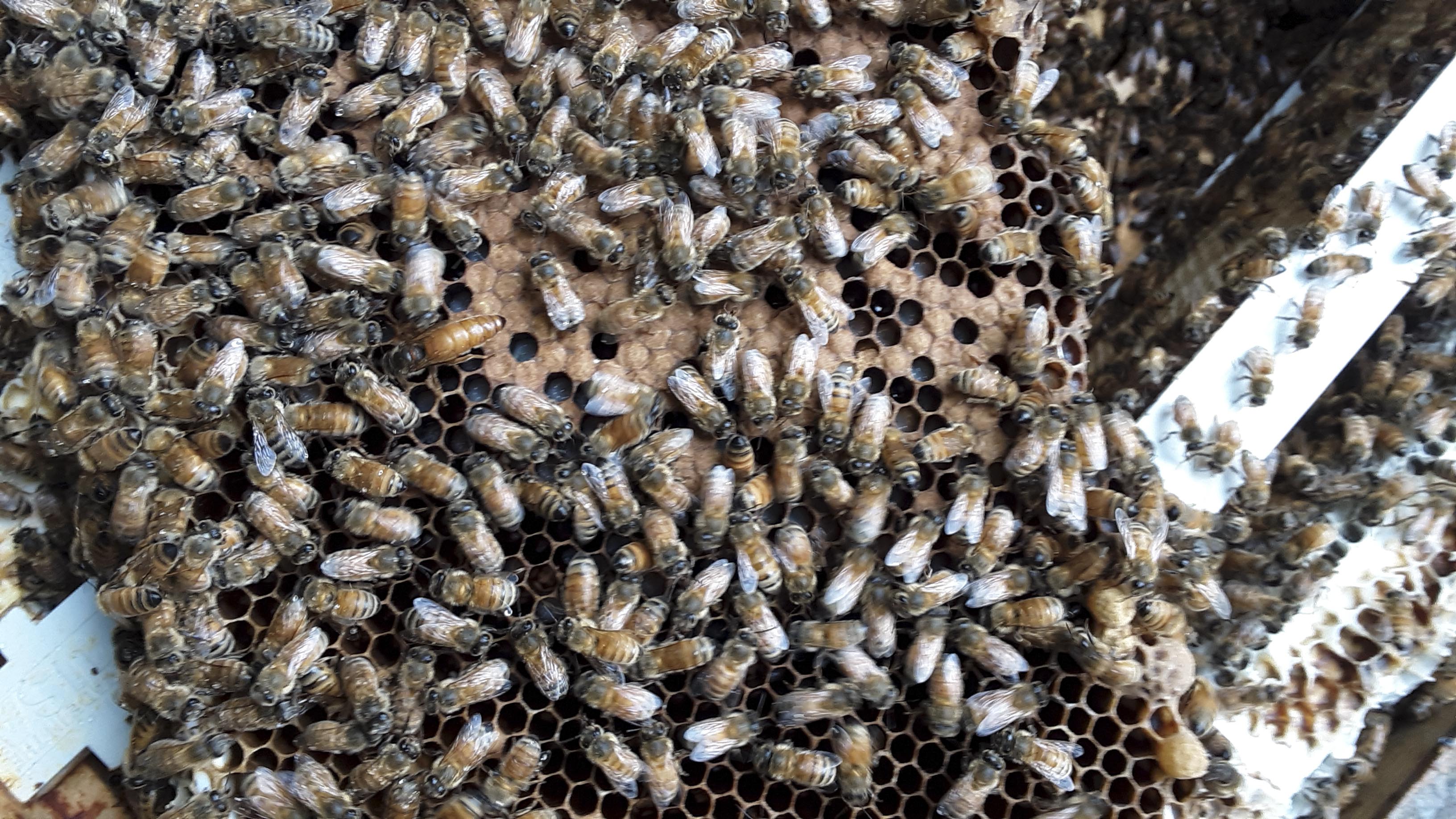
Difficult to diagnose. Spotty or ineadquate brood pattern. colony not developing properly in spring; colony not producing surpous honey (when others in same apiaryapiary:
a place where beehives and beekeeping equipment are located; also called a bee yard. An out-apiary is a site away from the owner’s residence.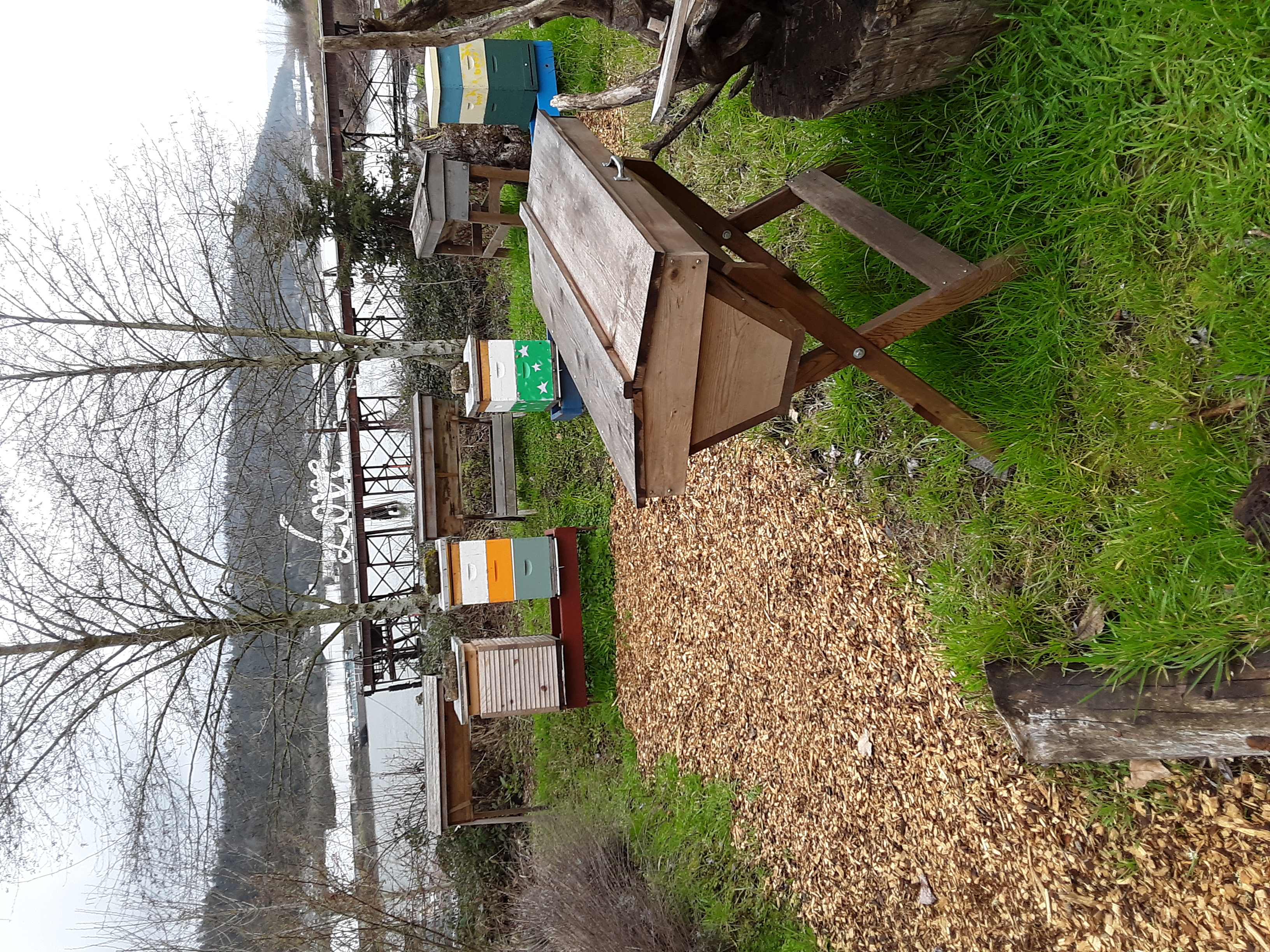 are).
We recognize genetic diversity in the honey bees managed by beekeepers. Bee races (also sometimes termed subspecies with a Latinized 3rd formal name designation; for example Apis mellifera mellifera – the German bee) is the term used to distinguish ecologically/behaviorally and morphologically different strains/geographic populations of honey bees (=races initially current term is ecotypes). Over 30 races have been named. The most widespread and useful races for beekeepers in the U.S. are Italian and Carniolan bees.
Body color can vary widely within different races, and between races, from very dark (such as German bees) to lighter (Italian bees for example). A difficult to diagnose condition is to use genetic differences to label queens that perform poorly in their egg laying or pheromonepheromone:
a chemical substance released externally by an individual (from an exocrine gland) which stimulates a response in a second individual of the same species
production. Condition can result from inbreeding in queen rearing operation. It can also mean a queen whose worker offspring are not productive or are susceptible to pests and diseases. Such queens are likely to have spotty brood patterns with eggs, larvae and cappedcapping:
the covering that bees add over comb cells containing fully ripened honey or to cap brood that has reached the pupal stage; bee bread cells are not capped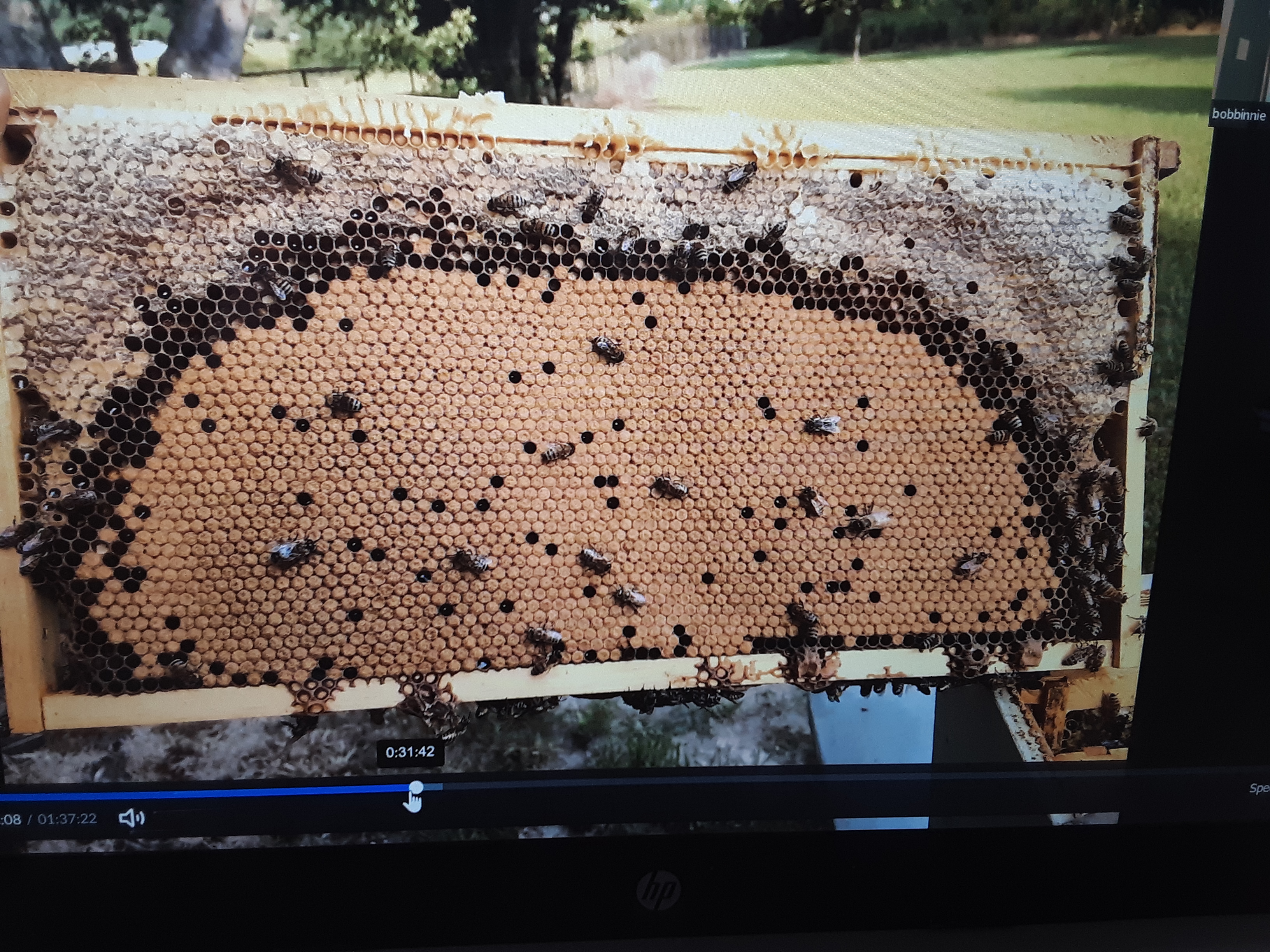 cells scattered on the comb and mixed with various life stages interspersed. (See also spotty brood patternspotty brood pattern:
capped worker cells that are not uniformly solid within the brood sphere; numbers of cells lacking brood of the same brood age; indicative of poor colony queen or poor health
).
There has been heightened efforts at developing bee stocks to improve bee defense against varroa mites. One major effort is development of hygienic bee stock. (see Hygienic colony fact sheet). Another was importation of Russian bees into the USDA. The USDA imported bees from far eastern Russia (where bees had been exposed to varroa mites for a longer time period and there were no efforts to use chemicals to control the mite) and tested their ability to control mites. Satisfied that they were a better stock, the USDA released the basic stock to a group of Russian Bee Breeders who continue to maintain this bee line and their enhanced mite defensive abilities.
Another selection program is autogrooming. A breeding program, originated in 1997 at Purdue University, has developed a stock line of workers that bite the legs from varroa mites leading to their dehydration/bleeding to death. Stock was tested by several Indiana and Ohio beekeepers and a cooperative of Heartland Bee Breeders has been esablished to further develop and distribute this stock. This stock has higher numbers of groomers of mites from honey bee bodies. The stock is termed mite biters (or simply biters or ankle biters).
Spring dwindle, queen issues
Glenn, Tom. 2002. Principles of Honeybee genetics. http://www.glenn-apiaries.com/principles.html
Themudo, Gonçalo Espregueira. et al. 2020. Declining genetic diversity of European honeybees along the twentieth century. Scientific Reports 10: 10520. https://www.nature.com/articles/s41598-020-67370-2
https://journals.plos.org/plosone/article?id=10.1371/journal.pone.0260833