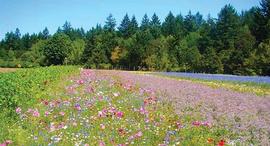
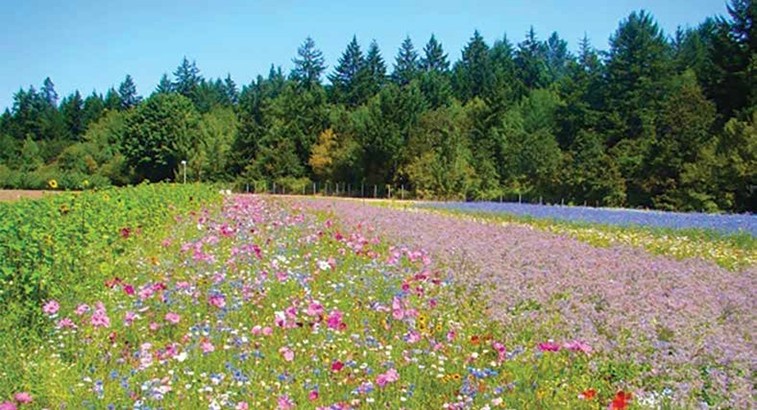
Foraging (field) bees bringing different colors of pollen into hive on hind legs. In field, bees foraging a variety of floral sources
Nectar has everything that a plant makes, at trace concentrations, the phytochemicals: flavanoids, phenols, and carotenoids. Honey has its own terroir, like wine, from the soil and water and environment of the plant supplying the nectar itself. Each honey resulting will have a distinctive smell and taste.
Bees need diverse pollen sources to meet dietary requirements of 10 essential amino acids, minerals and cholesterol. Diet diversity is best achieved with access to different flowering plants. The incoming pollen can be observed packed into pollen baskets of hind legs of foraging adult bees. Beekeepers use a pollen trap at hive entrance to intercept and collect incoming pollen (for human consumption or to feed back to colonies).
See also foraging
normal bee flight (foraging)
Hawkins, Jennifer, et al. 2015 Using DNA Metabarcoding to Identify the Floral Composition of Honey: A New Tool for Investigating Honey Bee Foraging Preferences. PLos One https://journals.plos.org/plosone/article?id=10.1371/jour nal.pone.0134735