Colony transfers from walls, trees or non-standard hives
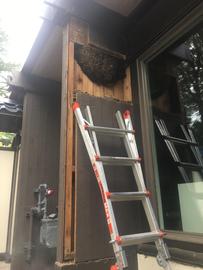
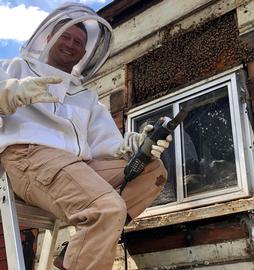
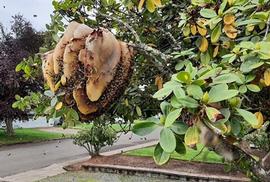
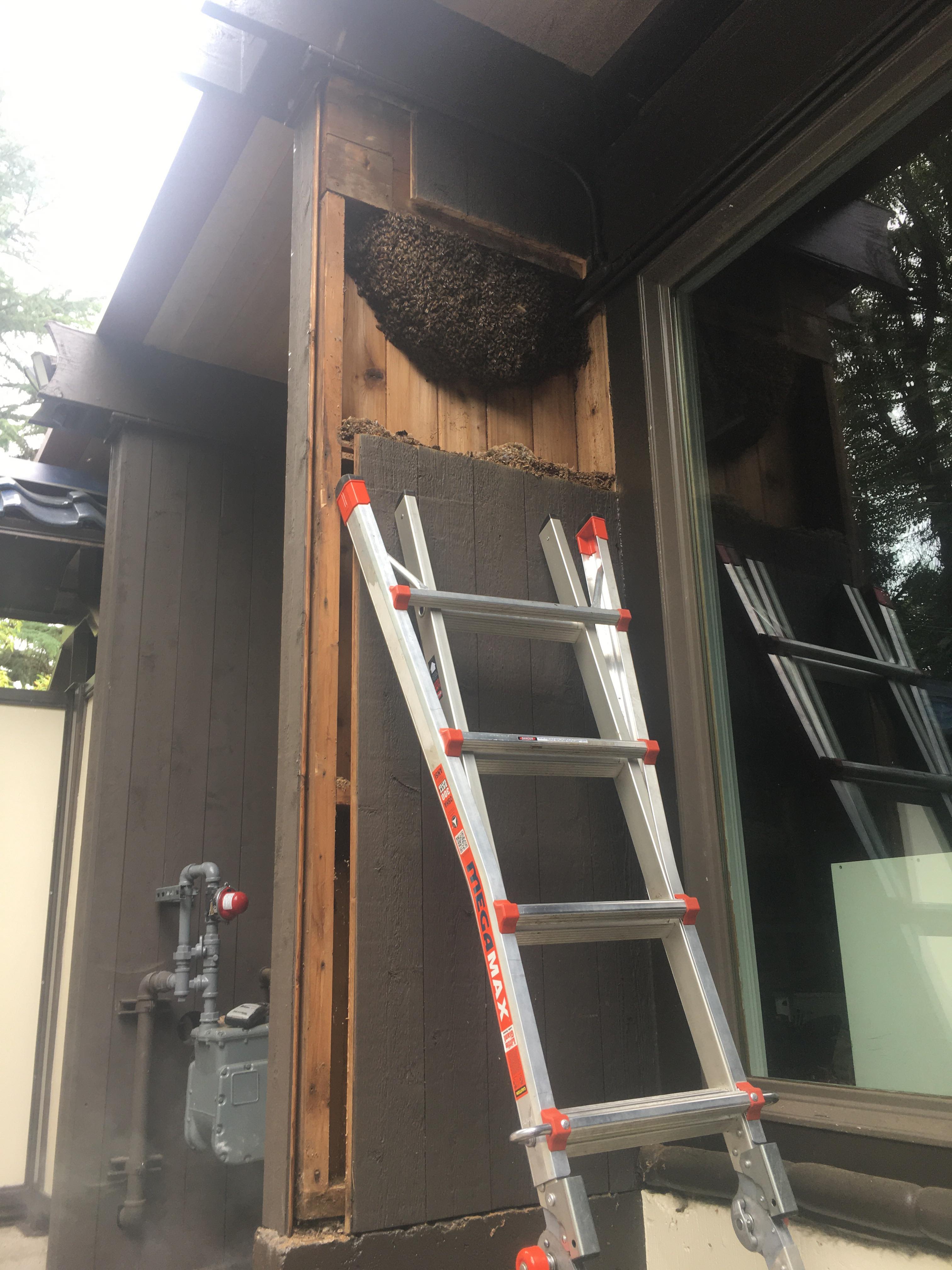
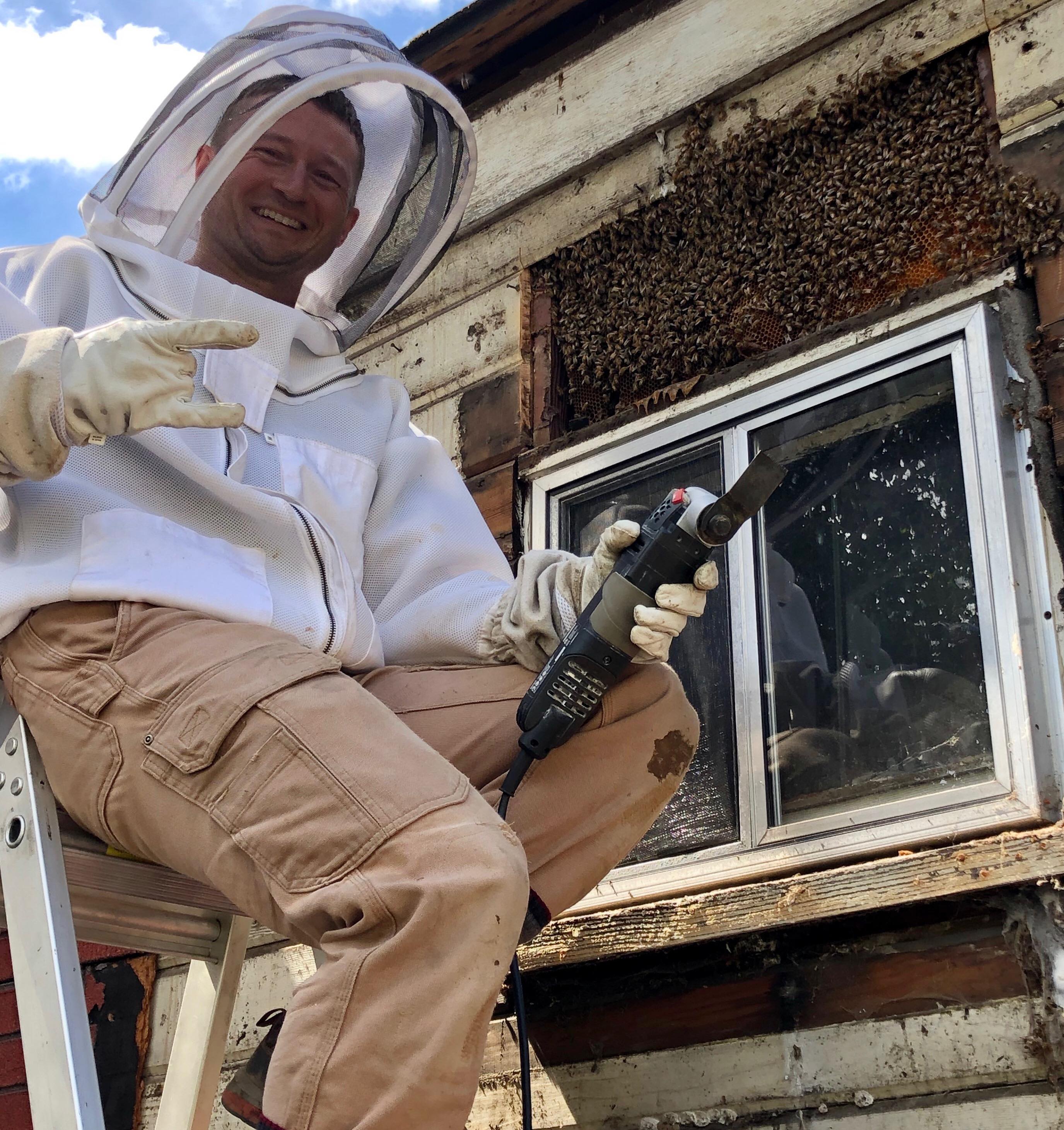
Cutouts or transfers of active colonies from a tree hollow or hollows in buildings or from non-standard hives into a standard hive can be very simple; however some such as cutouts or removal of colonies from trees or building voids can be very complex. Removal is usually best accomplished when the feral colony can be exposed and combs cut (especially brood frames - most of the honey is harvested at transfer) and transfered temporarily into frames with comb pieces held by string or rubber bands.
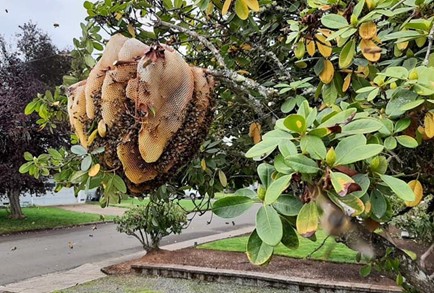
The longer the occupancy of the hollow or building the more difficult the transfer. Natural nest as illustrated would be a highly complicated transfer as would be the cutouts in the other two illustrations.
Some prefer to use a vacuum device to remove the majority of adults before attempting comb removal. There is a trapping mechanism that some use to trap the majority of adults into a capture/ "dummy" hive - holding them with a brood frame - by closing all entrances except one exit with use of a wire cone narrowed to bee space through or closely aligned with the capture hive. When the hive is sufficiently weakened it can be then exposed and the remainder of bees and honey/comb harvested.
This is NOT an easy method of obtaining a new colony. Be sure to read about how to do it before attempting a cutout/transfer. Resulting colonies need a lot of attentioin and feeding and often need be requeenedrequeen:
to replace a queen; old queens are often removed and replaced by a ripe queen cell or by a mated queen via an introduction cage
. Their chance of surviving the first winter is not very good when transfer is done later in the bee season.
Starting a colony with a colony split or through a nucnucleus:
also called a "nuc;" a smaller colony of bees usually with three to five frames. Nucs are splits (divides) made from larger colonies. Nucs are purchased as a method of starting a new colony or as a resource to use to bolster weaker colonies. See more information about nucs <a href="index.cfm?pageID=3093#standard">here</a> and <a href="index.cfm?pageID=3417#nuc">here</a>.
or package of bees. Success with feral hive cutouts is not usually very high.
Mussen, E.C. 2015. Removing honey bee swarms and established hives. UC ANR Publication 74159 http://ipm.ucanr.edu/PMG/PESTNOTES/pn74159.html
https://www.youtube.com/watch?v=aKvaVMNYInw
https://beekeepinglikeagirl.com/why-do-beekeepers-charge-for-live-bee-removal/
https://ecobeebox.com/rules-for-live-bee-removals-and-cut-outs-2016/