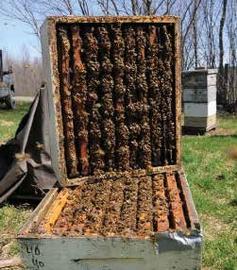
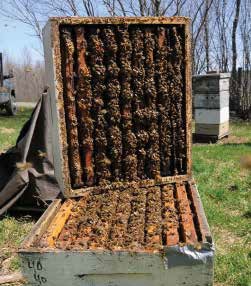
weak starter colony formed from split of larger colony, sometimes with majority of bees returning to donor colony when in same apiaryapiary:
a place where beehives and beekeeping equipment are located; also called a bee yard. An out-apiary is a site away from the owner’s residence.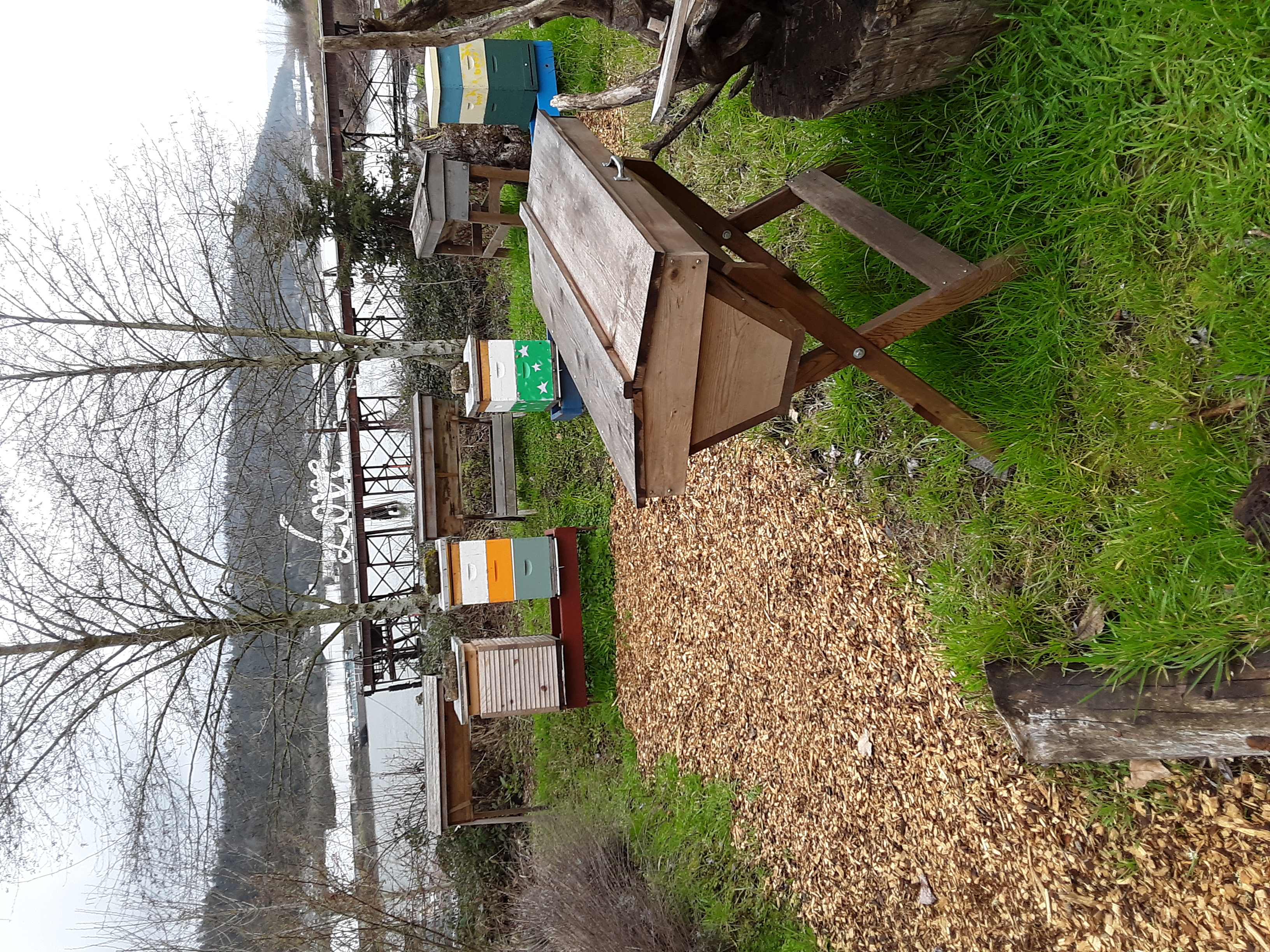 ,
Colonies are routine split (divided) during spring bildup to reduce the possibility of their swarming and to replace colonies lost during overwintering period. Splits may be 1, 2 or 3 frames of brood, one or two support frames (honey and bee bread) with nurse bes added. The split is put into a nucnucleus:
also called a "nuc;" a smaller colony of bees usually with three to five frames. Nucs are splits (divides) made from larger colonies. Nucs are purchased as a method of starting a new colony or as a resource to use to bolster weaker colonies. See more information about nucs <a href="index.cfm?pageID=3093#standard">here</a> and <a href="index.cfm?pageID=3417#nuc">here</a>.
box (usually then termed a nucnucleus:
also called a "nuc;" a smaller colony of bees usually with three to five frames. Nucs are splits (divides) made from larger colonies. Nucs are purchased as a method of starting a new colony or as a resource to use to bolster weaker colonies. See more information about nucs <a href="index.cfm?pageID=3093#standard">here</a> and <a href="index.cfm?pageID=3417#nuc">here</a>.
) or hive body. Splits can be kept in same apairy (with some risk of adult bees drifting back to original home colony) or moved to a different apiaryapiary:
a place where beehives and beekeeping equipment are located; also called a bee yard. An out-apiary is a site away from the owner’s residence.. The queenless portion (usually the split) is requeenedrequeen:
to replace a queen; old queens are often removed and replaced by a ripe queen cell or by a mated queen via an introduction cage
with a cappedcapping:
the covering that bees add over comb cells containing fully ripened honey or to cap brood that has reached the pupal stage; bee bread cells are not capped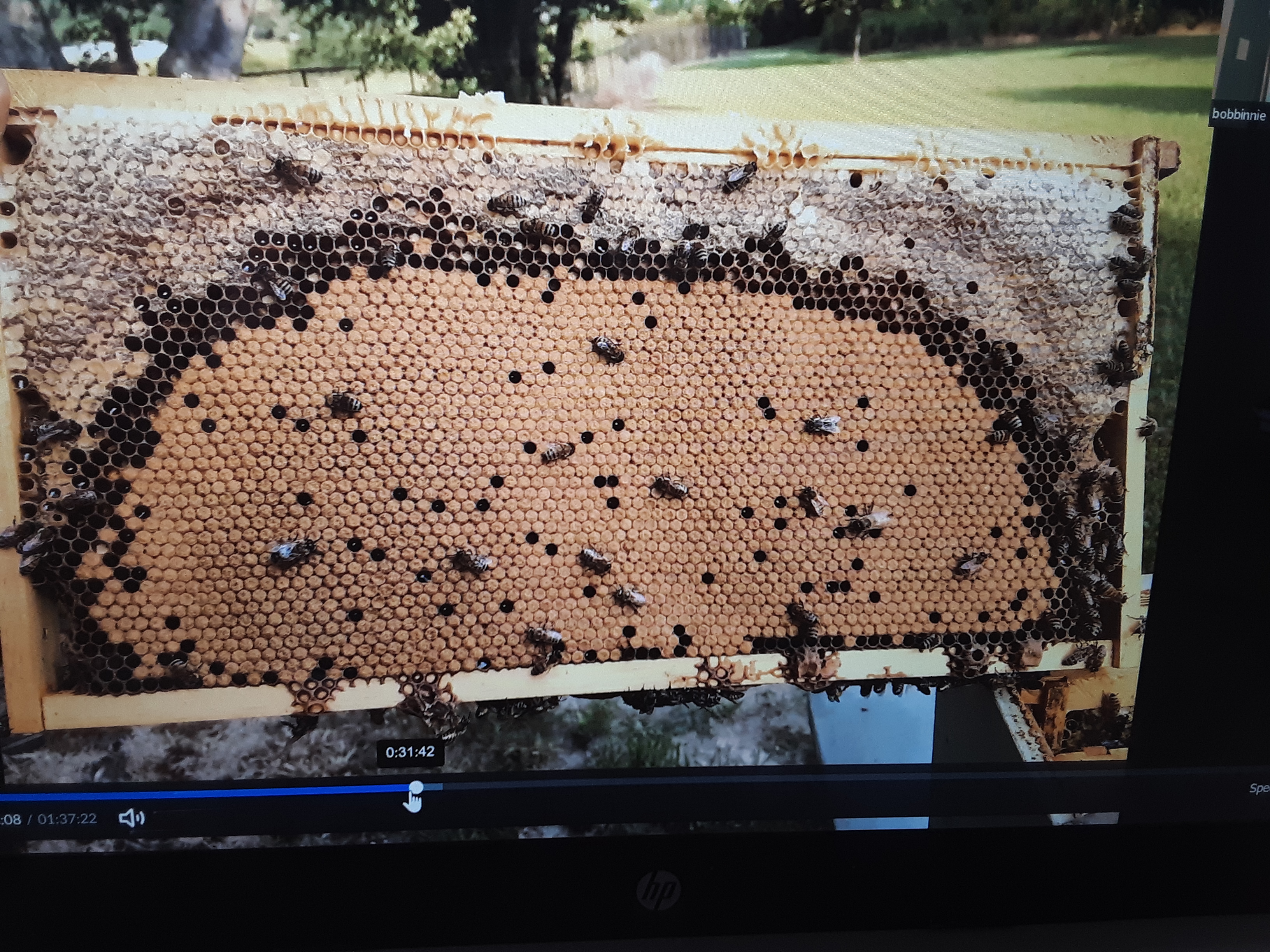 queen cell or a mated queen in a cage or allowed to rear a replacement via emergency queen cells
Early spring splits should include 2 or 3 brood frames with additonal younger-aged adult bees shaken into colony and then the colony checked next day/within week to be sure enough adult bees are still present to cover brood and allow queen to realize full egg laying potential. Splits may be used to uniteunite:
combine one colony with another; opposite of divide
with colonies for overwintering with the new queen and older queen killed.
Virtually all commercial beekeepers split strong colonies (as means of making up winter loss) or simply remove brood from stronger colonies to transfer to weaker colonies during spring buildup
weak colony; spring dwindling
Univ Guelph 2016. Splitting hives. https://www.youtube.com/watch?v=YQQSVIACyrU
Carter, Anthony. 2021. Beekeeping 101. https://www.beekeeping-101.com/split-beehive-create-second-colony/#:~:text=How%20to%20Split%20a%20Beehive%20and%20Create%20a,the%20nurse%20bees%20into%20the%20new%20hive.%20