Mated queen (rarely virgin queen) in a queen cage intended for colony queen introduction. Caged queen may include worker attendants with the queen.
Queens are caged to ship from queen producer to beekeeper. They are used to requeenrequeen:
to replace a queen; old queens are often removed and replaced by a ripe queen cell or by a mated queen via an introduction cage
a colony or to requeenrequeen:
to replace a queen; old queens are often removed and replaced by a ripe queen cell or by a mated queen via an introduction cage
a division (split) the beekeeper makes to reduce the size of a larger colony (such as when colony is preparing for swarming) or to begin a new colony (for example when there are winter deadouts).
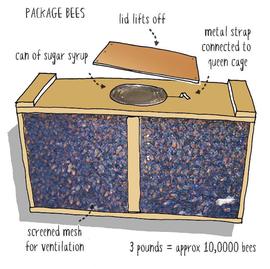
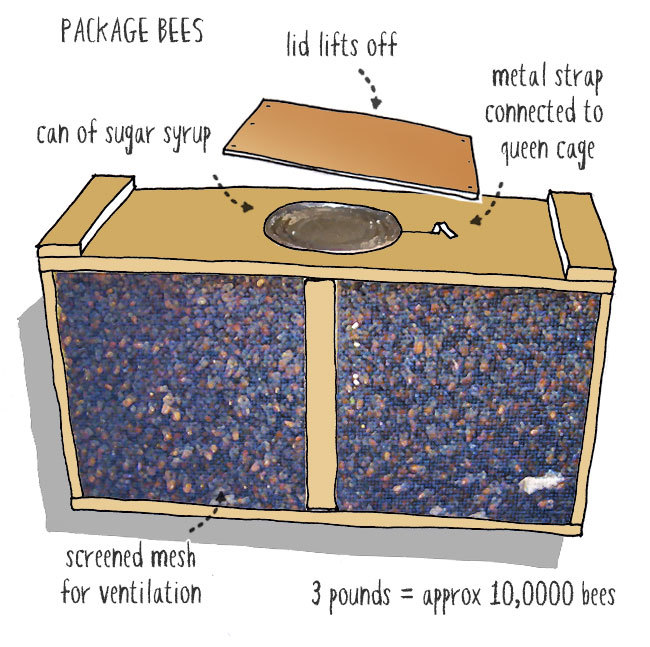
Queens are caged in package bees shipped to beekeepers starting a new colony. The queen may be released immediately (direct release) but it is preferred to allow the worker bees to release the queen (indirect release). Indirect release is accomplished by worker bees chewing through the sugar candy plug of the queen cage.
Caged queens may have worker attendants with the queen or be confined alone in a cage. Before release, beekeepers can assess if the bees are ready to accept the queen by observing the behavior of the worker bees. If they move freely it is OK to release but if moving rapidly and/or evidence of biting the cage, the queen should remain caged for later release. IF released too soon the bees may ball (and kill) the queen.
Beekeepers may cage a queen to create a brood break for varroa mite control.
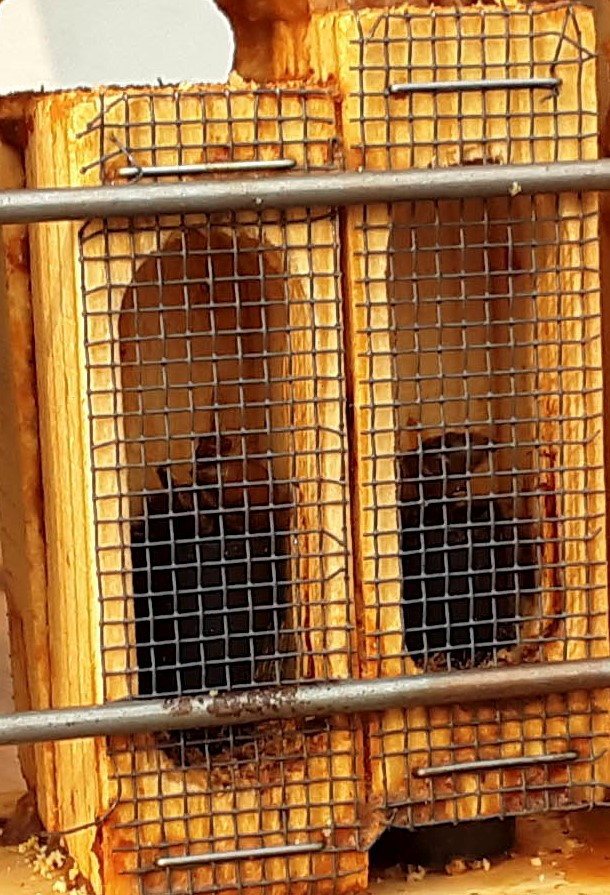
There are three common cages used to ship queens - the Benton (3 hole) wooden cage, the California queen cage (a single cavity normally only with a queen and no attendants) and the JZ BZ plastic cage. When shipping large numbers of queens, the queens may be caged and put into a battery box, usually in JZBZ plastic cages. The shipping package is stocked with younger-aged attendant bees, not the individual cages of the queens.
Caged queens may suffer from being sticky if cage candy plug, honey or sugar water feeders leak. Queen health is negatively affected by heat/cold extremes in temperatures during handling or shipment. Queens (or queen attendants) may have varroa mites or the cage may include small hive beetle adults or wax moth caterpillars
There are numerous designs of cages for queen introduction into a colony that will influence queen acceptance/rejection. The shipping cage may be used with the escape filled with queen candy that must be consumed to release the queen (it helps ensure a slower release so worker bees become accustomed to the distinctive queen odors for improved queen acceptance). Alternatively, a push in cage (confining the queen over some beeswax comb cells), made of wire or plastic, might be used. Push in cages can include (or exclude) worker bee attendants to allow for improved acceptance of the queen. Push in cages can be purchased or homemade of wire so bees can feed and care for the queen while confined. Cages may or may not have attendant workers..
For protection, queen cells close to emergence of virgin queens may be enclosed in a queen cell cage (plastic hair rollers sometimes substituted) - see hole chewed in queen cell.
Several types of cage (adult queen, queen cell) made of wood, wire plastic
Conrad, ross. 2015. Introducing her royal highness. Bee Culture. June. https://www.beeculture.com/introducing-her-royal-higness/
Kelly, Paul Caring for caged queens.2019. Univ Guelph. https://www.youtube.com/watch?v=E2aRpTkoDeM
Mangum, Wyatt. 2020. Queen Introduction Part I and II. Amer. Bee Jour. https://americanbeejournal.com/queen-introduction-part-2-the-eft-bees/
https://carolinahoneybees.com/care-caged-queen-bee/
https://www.youtube.com/watch?v=qXVVOn5uZCY
https://www.youtube.com/watch?v=uO2biHgsfmQ
https://carolinahoneybees.com/care-caged-queen-bee/
http://www.dave-cushman.net/bee/queencages.html