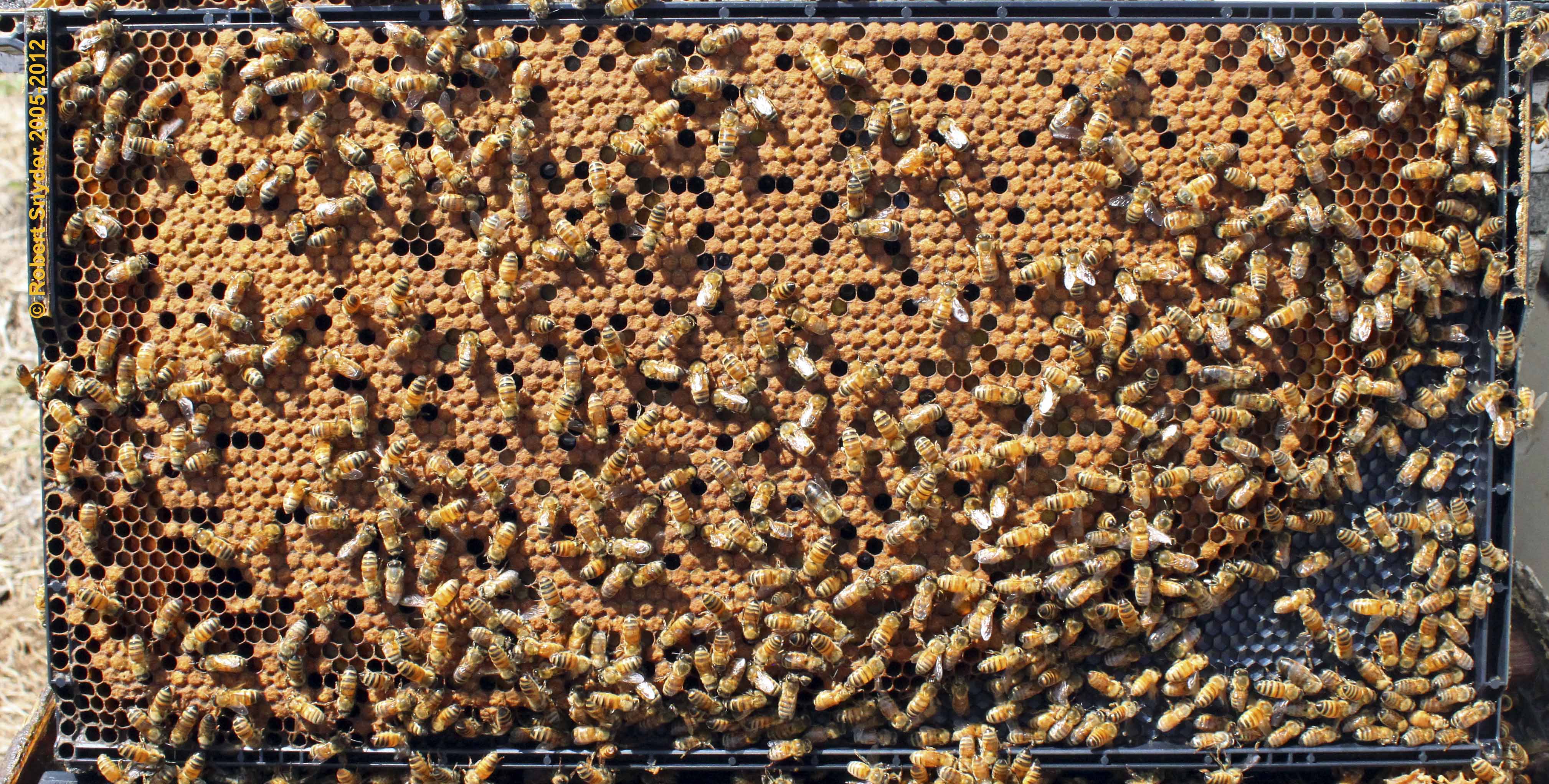
Imbalance of expected ratio of egg to larvae to pupal stage. Observed large larval death event or pupal cell uncappinguncapping:
the process of prematurely removing the capping from pupal cells; usually associated with hygienic bees looking for mites reproducing on pupae
and removal of contents by adults. Expect to occur following queen removal/queen replacement events or while queen event is occurring (swarm preparations/supersedure). May occur following miticide treatment or external pesticide poisoning or starvation event.
A healthy brood nest will show all three development stages, eggs, larvae and pupae in approximate ratio of 1 egg to 2 larvae to 4 cappedcapping:
the covering that bees add over comb cells containing fully ripened honey or to cap brood that has reached the pupal stage; bee bread cells are not capped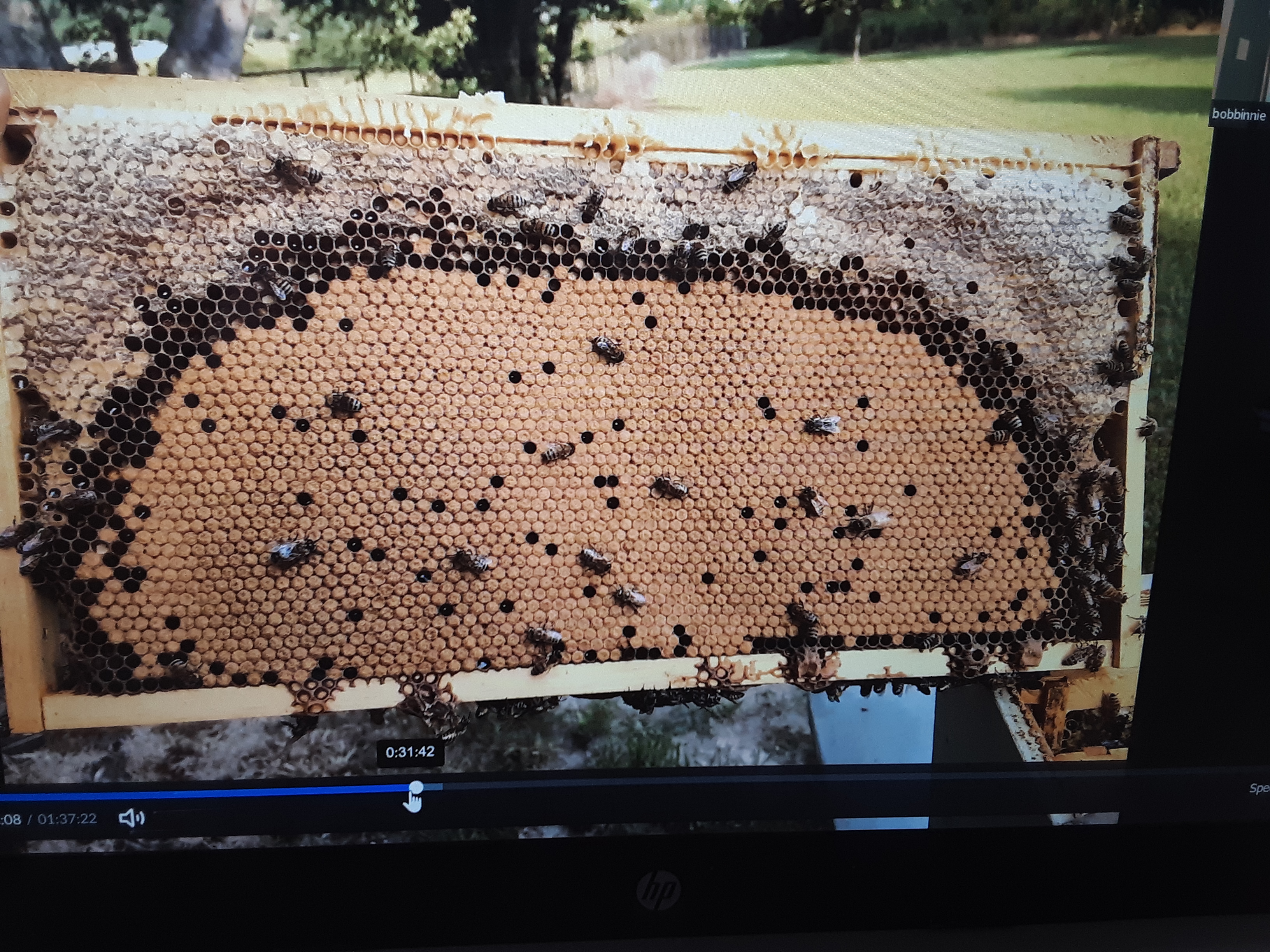 pupae. The egg and larva should be white (until cappedcapping:
the covering that bees add over comb cells containing fully ripened honey or to cap brood that has reached the pupal stage; bee bread cells are not capped), should glisten, respond to light probing and should be grouped of similar age. The brood “pattern” (the area occupied by brood in the comb) should be spherical in shape and extend across more than a single frame, depending upon season. There should be sufficient adult worker bees to cover the brood.
When and especially why the normal brood pattern is not normal may be difficult to determine. Poor resources, heat stress, pesticide kill and/or diseases are among causes that may disrupt the normal pattern.
Feeding colonies sugar syrup and/or protein may speed colony recovery; sometimes requeeningrequeen:
to replace a queen; old queens are often removed and replaced by a ripe queen cell or by a mated queen via an introduction cage
may help speed recovery.
Queen replacementqueen replacement:
removal of an old queen and installation of a new queen in a bee colony
event (naturally by bees or by beekeeper accidently killing queen or removing colony queen); pesticide damage to colony (from miticide treatment or external to colony); bee PMS; starvation event.
Underwood, R. & M. Lόpez-Uribe. 2019. Methods to Control Varroa Mites: An Integrated Pest Management Approach. https://extension.psu.edu/methods-to-control-varroa-mites-an-integrated-pest-management-approach
Hesbach, William. 2015. Splits & Varroa: More Colonies, Fewer Mites, New Queens – What Could Be Better? Bee Culture. July. https://www.beeculture.com/splits-varroa-more-colonies-fewer-mites-new-queens-what-could-be-better/
HBHC. 2018. Using requeeningrequeen:
to replace a queen; old queens are often removed and replaced by a ripe queen cell or by a mated queen via an introduction cage
and brood interruption to control varroa. https://www.youtube.com/watch?v=GnPBIStvC60